//
Codex /goal and Claude Managed Outcomes: The New Control Loops

TL;DR
A deep comparison of Codex's new /goal loop and Claude managed agents outcomes, with practical workflow examples, control tradeoffs, and migration guidance for long-running tasks.
Direct answer
Codex /goal and Claude Managed Outcomes: The New Control Loops
A deep comparison of Codex's new /goal loop and Claude managed agents outcomes, with practical workflow examples, control tradeoffs, and migration guidance for long-running tasks.
Best for
Developers comparing real tool tradeoffs before choosing a stack.
Covers
Verdict, tradeoffs, pricing signals, workflow fit, and related alternatives.
Last updated: June 11, 2026. Every version, availability, and plan-gating claim below was re-verified against the official sources in this table on June 11, 2026.
Official Sources
| Source | What to verify |
|---|---|
| OpenAI Codex changelog | Release notes for Codex CLI including /goal and persisted workflow behavior |
| OpenAI Codex docs hub | Current Codex product surfaces (web, CLI, cloud tasks, integrations) |
| Codex CLI slash commands | /goal command reference and related CLI control commands |
| OpenAI Codex pricing | Current pricing and plan details |
| Claude Managed Agents overview | Beta status, required beta header, and availability for managed agents |
| Claude outcomes docs | Outcomes definitions, rubric shape, iteration caps, and result states |
| Anthropic pricing | Current pricing and plan details |
There are two similar sounding directions to make long-running agents less flaky.
- OpenAI's Codex CLI added
/goalin version 0.128.0, and it is now a documented core slash command (Codex CLI is at 0.139.0 as of June 9, 2026, verified June 11, 2026 via the Codex changelog). - Anthropic ships outcomes as part of Claude Managed Agents, now in public beta.
They are both about keeping the loop going until quality is actually acceptable, but they solve it at different layers.
If you are here to choose a workflow, the short answer is:
- Use Codex
/goalwhen you want a coding agent to keep making progress inside a terminal session, especially across repo edits, tests, retries, and interruptions. - Use Claude outcomes when the output needs an explicit acceptance rubric, review trail, and measurable "done" state.
- Use both when the work is long-running and high-stakes: Codex-style goal persistence for execution, then outcome-style rubrics for final quality checks.
For adjacent decisions, read the broader Codex vs Claude Code comparison, the Claude Code vs Codex side-by-side page, the April Codex changelog analysis, and the AI agent frameworks guide. If you are asking whether Codex can handle tasks beyond code, read Codex as a general-purpose AI agent. If cost is the deciding factor, start with the pricing hub.
If you want to practice the execution side instead of just comparing control loops, the Agentic Coding course covers decomposition, multi-agent workflows, and production agentic development patterns.
What changed with /goal
Codex's own changelog says 0.128.0 added persisted /goal workflows with app-server APIs, model tools, runtime continuation, and TUI controls to create, pause, resume, and clear goals (OpenAI Codex changelog).
Since then, /goal has stabilized into a documented core command. The slash commands reference lists /goal <objective>, /goal pause, /goal resume, and /goal clear, with goal objectives capped at 4,000 characters (verified June 11, 2026). Releases 0.137.0 and 0.138.0 kept tuning the loop with templates for goal steering prompts, idle continuation, and fixes that stop goals auto-continuing after terminal turn failures.
That sounds simple in a headline, but the interesting part is the implementation shape:
- It is in the command loop itself, not in your prompt alone.
- A goal is durable across restarts.
- The TUI can control the cycle (
create,pause,resume,clear) and the CLI can continue work without you typing follow-up prompts each turn. - The release note implies model/tool and UI surfaces were added together, which usually means this is productized as a command-state feature, not just a clever instruction hack.
The older pattern was: send a goal, let the model act a bit, stop, send next command. /goal is trying to invert that pattern so it keeps iterating in one execution envelope until stop criteria are met.
Why this matters operationally
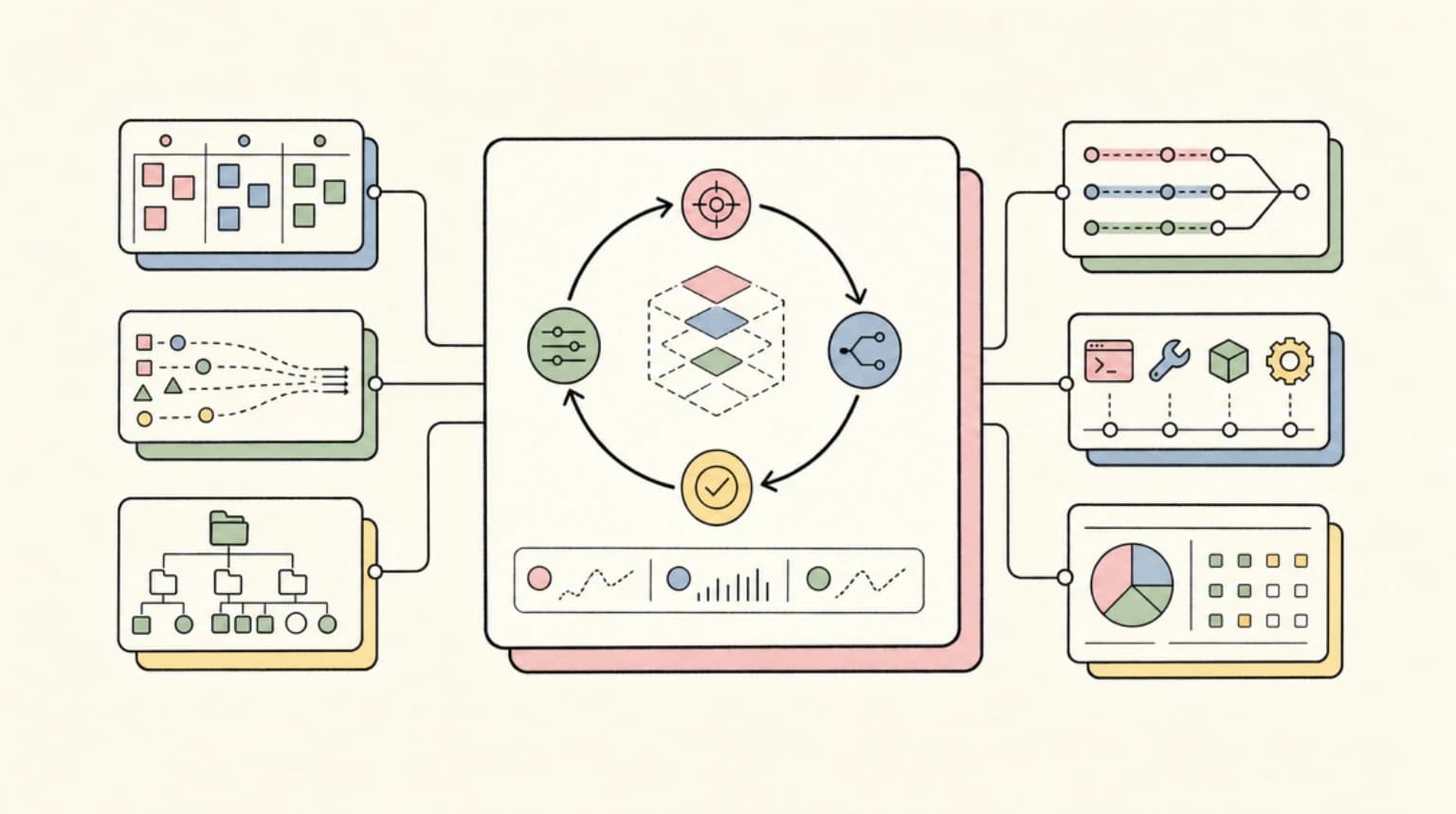
The old problem is usually one of loop boundary leakage:
- You ask for a non-trivial task.
- The agent does multiple shell/tool steps.
- Either it runs out of budget or gets into a suboptimal partial path.
- You do not have a clean way to continue from state without repeating context.
A persisted goal narrows this by formalizing loop continuation and reducing "human re-entry overhead."
Where Codex /goal likely shines
From the release context and existing Codex command model:
- Terminal-native development workflows: if you are doing hands-on repo work, compile checks, and iterative shell-driven repair, command-level persistence is a direct fit.
- Plan-mode and interruption semantics: the same release also references plan-mode nudges and
/statusline//titleediting during active turns, which points to a richer TUI-centered workflow control plane. - Feature-flagged evolution: the 0.128.0 bullet list reads like staged rollout and feature gating. That phase has since settled:
/goalships in the standard CLI command set rather than behind a plan gate, while Codex plan gating applies to cloud surfaces (cloud tasks, code reviews, and integrations require ChatGPT Plus or above per the pricing page, verified June 11, 2026).
I read that as: /goal is primarily a tooling-loop enhancement around coding agent endurance.
Get the weekly deep dive
Tutorials on Claude Code, AI agents, and dev tools - delivered free every week.
From the archive
DeepSeek V4 Changes the Coding Agent Cost Equation
May 2, 2026 • 8 min read
Flue and the Agent Harness Layer
May 2, 2026 • 8 min read
GitHub Copilot Coding Agent and CLI: Why GitHub Is Back in the Agent Race
May 2, 2026 • 8 min read
Ruflo: Multi-Agent Orchestration for Claude Code That Actually Scales
May 2, 2026 • 7 min read
Claude outcomes: rubric-driven task closure
Claude Managed Agents ships outcomes as part of its public beta, where you define what "done" looks like and the system works toward that target with a grader loop.
The managed agents documentation says outcomes let you tell the agent what "done" looks like, then evaluate per-criterion grading in a separate context window until the outcome is satisfied or max iterations are hit (Claude managed agents outcomes, verified June 11, 2026).
Key details in that page:
- Claude Managed Agents is in public beta, enabled by default for all API accounts; every Managed Agents API request requires the
managed-agents-2026-04-01beta header (the SDK sets it automatically). - A rubric is required, as markdown text or uploaded file.
max_iterationsis optional, defaulting to 3 with a cap of 20.- The grader returns structured results per criterion and emits explicit outcome status (
satisfied,needs_revision,max_iterations_reached,failed, orinterrupted). - You can chain outcomes one after another in a session.
This is not just "keep looping." It is close-loop evaluation with explicit quality criteria.
Real comparison: control primitives
Let's compare from a design perspective.
1) What is the stopping rule?
/goal(Codex): runtime/command-oriented termination via agent loop and manual controls (pause,clear, budget limits in feature context). It sounds like loop completion is driven by model judgment plus command state.outcome(Claude): outcome status is externally graded against rubric criteria in separate context. That makes termination a function of measured rubric satisfaction.
2) Where does quality live?
/goalquality is implicit, shaped by your prompt and agent context.- outcomes quality is explicit, shaped by rubric design and evaluator output.
3) Operational friction
/goalintegrates with existing Codex sessions and CLI continuity (especially useful when you already live inside terminal loop).- outcomes integrates with managed-agent sessions and Files API event stream, and uses event telemetry (
span.outcome_evaluation_*) that is useful for observability and audit.
4) Infrastructure complexity
/goalis a command feature and likely lighter to adopt if you already standardize around Codex in a repo.- outcomes demands rubric infrastructure and managed-agent API headers, but gives better reporting for quality-critical workflows.
Novel examples that reveal the difference
Example 1: Large-scale migration with build validation
Use /goal when: you need persistent CLI execution with many shell passes.
- Goal text: "Migrate all API v1 clients to v2 and keep tests green."
- Agent keeps running: search + patch + run tests + patch again.
- Human intervention points:
pause,status, final diff.
This is the right shape when your objective is operational execution and tool orchestration speed.
Example 2: Financial model generation from SEC filings
Use outcomes when: you need objective quality checks.
- Rubric includes explicit data source, assumption statement fields, forecast horizon, and file structure.
- Agent writes output artifacts and grader checks each criterion.
- Failure gives exact rubric gaps to revise.
This is the right shape when acceptance is judgment-heavy and you need repeatability.
Example 3: Product support playbook from a messy codebase
Hybrid approach:
goal: first pass that extracts stack trace clusters and prepares candidate fixes.outcome: second pass with rubric requiring reproduction steps, regression test, and evidence artifact links.
This gives the endurance of /goal plus rubric-level correctness from outcomes.
Common mistakes
- Treating
goalas output quality control
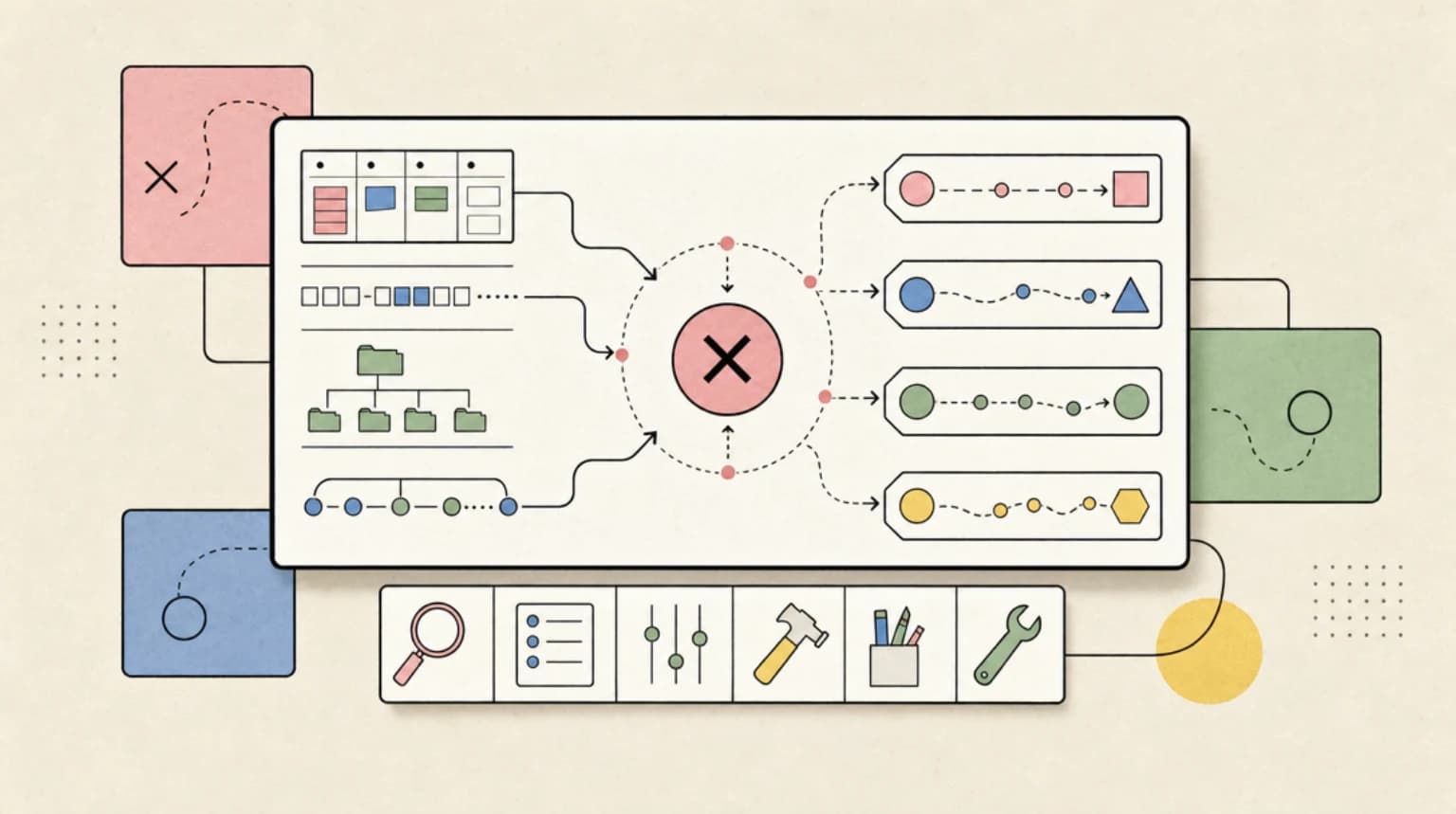
/goal is excellent for keeping work moving, but without explicit criteria it can optimize for forward motion over quality nuance.
- Treating outcomes as "just autopilot"
Outcomes still depend on rubric design. Bad rubric = bad stopping decision.
- Ignoring token budgets / iteration caps
Codex has token/continuation limits in feature work; outcomes has max iterations (default 3, max 20) and explicit failed/max_iterations_reached result states.
- Not version-gating
Managed Agents is still in beta, and Anthropic notes behaviors may be refined between releases. Plan for fallback runbooks.
Practical migration map
If you are currently on Codex-only loops, start with:
- Enable and test
/goalin staging workspace. - Measure average iterations, interruption frequency, and budget exhaustion events.
- Add manual checkpoint artifacts after each successful loop.
If you then add managed-agent workloads:
- Define two rubric templates: a minimal "safety/format" rubric and a full "business quality" rubric.
- Prefer rubric templates as versioned files in a session-level directory.
- Emit outcome IDs and evaluation summaries to your telemetry store.
If you are choosing where to start right now:
- Need immediate coding loop resilience in terminal sessions?
/goal. - Need auditable deliverable quality in autonomous tasks? outcomes.
- Need a broader tool choice first? Start with AI tool comparisons, AI coding tools pricing, or Claude Code vs Codex.
So what's the real difference?
This is the sharp distinction:
- Codex
/goal= loop state as runtime control. - Claude outcomes = loop state as quality control contract.
They are converging, but they are not redundant yet.
For teams building production automations, the highest-leverage stack is often both:
- Use
/goalfor "keep going and recover from interruption." - Use outcomes when handoff quality must be measurable and rubric-traceable.
What changed
/goalgraduated from a 0.128.0 feature rollout into a documented core slash command withpause,resume, andclearplus a 4,000 character objective cap, and Codex CLI reached 0.139.0 on June 9, 2026 (verified June 11, 2026 via the Codex changelog and slash commands reference).- Goal workflows kept maturing: 0.137.0 added templates for goal steering prompts and idle continuation, and 0.138.0 fixed
/goal editmultiline paste and stopped goals auto-continuing after terminal turn failures. The June 2026 Codex changelog breakdown covers the full release train. - Codex plan gating is now explicit: Codex ships with ChatGPT Free, Go ($8/month), Plus ($20/month), Pro (from $100/month), Business (pay as you go), and Enterprise/Edu, with cloud tasks, code reviews, and integrations requiring Plus or above (verified June 11, 2026 via Codex pricing).
- Claude Managed Agents dropped the research preview framing for its core: it is a public beta enabled by default for all API accounts behind the
managed-agents-2026-04-01header, outcomes documents a default of 3 and max of 20 iterations plus a fifthinterruptedresult, and only MCP tunnels and dreaming remain gated research previews (verified June 11, 2026 via the Managed Agents overview). - Managed agents also picked up cron-style schedules and credential vaults in public beta in early June 2026 (TechTimes, June 10, 2026); see Claude Code routines vs managed agent schedules for how scheduling changes the control loop picture.
FAQ
What is the difference between Codex /goal and Claude managed outcomes?
Codex /goal is a runtime control feature built around persisted workflows, runtime continuation, and TUI controls for creating, pausing, resuming, and clearing goal state. Claude managed outcomes is a quality control feature that uses explicit rubrics to grade whether work meets acceptance criteria before stopping. Use /goal for persistent execution, outcomes for measurable deliverables.
When should I use Codex /goal instead of Claude outcomes?
Use Codex /goal when your task is terminal-native development work like migrations, test fixes, or repo refactoring where the primary need is durable continuation through repo edits and shell-driven repair cycles. If your task needs an explicit acceptance rubric or audit trail, use Claude outcomes instead.
Can I use Codex /goal and Claude outcomes together?
Yes, a hybrid approach is often the best choice for long-running, high-stakes work. Use Codex /goal for the execution phase where the agent needs to keep making progress across shell commands and test cycles. Then use Claude outcomes as a final quality gate with explicit rubric criteria. This gives you both execution endurance and measurable correctness.
How do I migrate from Codex loops to Claude managed outcomes?
Start by testing /goal in a staging workspace to measure iteration count, interruption frequency, and budget exhaustion. Add manual checkpoint artifacts after each loop. When adding managed-agent workloads, define rubric templates as versioned files: one minimal safety/format rubric and one full business quality rubric. Emit outcome IDs and evaluation summaries to your telemetry store.
What are the limitations of Codex /goal?
The main limitation is that /goal optimizes for forward motion, not output quality. Without explicit acceptance criteria, it can complete work that passes tests but misses quality nuance. It also has token and continuation limits that may halt complex tasks, and goal objectives are capped at 4,000 characters (point the goal at a file for longer instructions). For quality-critical workflows, pair /goal with a rubric-based quality check or use Claude outcomes.
What are the limitations of Claude managed outcomes?
Claude managed outcomes depends entirely on rubric design - a bad rubric leads to bad stopping decisions. The platform is also still in beta, so you should plan for fallback runbooks. The managed-agent API requires the managed-agents-2026-04-01 beta header and has max iteration limits (default 3, max 20). When the grader returns max_iterations_reached or failed, you need a recovery path.
Which is better for production automations?
For production, the highest-leverage stack is often both: use Codex /goal for "keep going and recover from interruption" during execution, then use Claude outcomes when handoff quality must be measurable and rubric-traceable. This combines the execution resilience of /goal with the quality assurance of rubric-graded outcomes.
How do Codex /goal and Claude outcomes compare on cost?
The public docs do not provide a clean apples-to-apples price formula. Codex is bundled with ChatGPT plans (Go at $8/month, Plus at $20/month, Pro from $100/month, Business pay as you go), with heavier usage drawing from credits, so treat Codex /goal cost as the underlying session and model usage on your plan and check OpenAI Codex pricing before estimating. Treat Claude outcomes as managed-agent API usage plus outcome evaluation usage, then check Claude API pricing. For budget-sensitive work, start with the AI coding tools pricing comparison and the pricing hub.
Read next
Codex Is Becoming a General-Purpose AI Agent, Not Just a Coding Tool
OpenAI is turning Codex from a coding assistant into a broader agent workspace for files, apps, browser QA, images, automations, and repeatable knowledge work.
8 min readAgent Architecture: Building Multi-Step AI Workflows That Survive Production
A practical architecture for multi-step Claude agents. Loop patterns, state management, error recovery, and the production gotchas that turn a five-step demo into a 20 percent success rate at scale.
11 min readFlue: The Agent Harness Framework and Why It Feels Different
A long-form technical read on Flue from Fred K Schott, with deeper comparisons against OpenAI Agents, Vercel AI SDK, Google ADK, LangChain, Deep Agents, and CrewAI, plus practical production patterns.
24 min readShare
Suggest an editSave
Developers Digest
Technical content at the intersection of AI and development. Building with AI agents, Claude Code, and modern dev tools - then showing you exactly how it works.
300+ videos30K+ GitHub stars50+ articles
Related Tools
AI Coding
Conductor
Mac app for running parallel Claude Code, Codex, and Cursor agents in isolated workspaces. Watch every agent work at onc...
View ToolAI FrameworksNew
Claude Agent SDK
Anthropic's Python SDK for building production agent systems. Tool use, guardrails, agent handoffs, and orchestration. R...
View ToolAI Frameworks
Agency Swarm
Multi-agent orchestration framework built on the OpenAI Agents SDK. Define agent roles, typed tools, and directional com...
View ToolAI CodingDaily Driver
Claude Code
Anthropic's agentic coding CLI. Runs in your terminal, edits files autonomously, spawns sub-agents, and maintains memory...
View ToolApps from Developers Digest
Developer Tools
Agent Hub
Every coding agent in one window. Stop alt-tabbing between Claude, Codex, and Cursor.
View AppDeveloper ToolsIn Progress
Skill Builder
Turn a one-liner into a working Claude Code skill. From idea to installed in a minute.
View AppDeveloper ToolsPlus $20/mo
Skills Pro
Unlock pro skills and share private collections with your team.
View AppRelated Guides
Guide
Managed MCP - Claude Code
Admin-controlled allow and deny lists for MCP servers.
Claude CodeGuide
Claude Code Complete Course
A complete, citation-backed Claude Code course with setup, prompting systems, MCP, CI, security, cost controls, and capstone workflows.
ai-developmentGuide
Effort Levels - Claude Code
Low, medium, high, xhigh, and max for adaptive reasoning control.
Claude CodeRelated Videos

Nimbalyst: The Open-Source Visual Workspace for Building with Codex and Claude Code
Nimbalyst Demo: A Visual Workspace for Codex + Claude Code with Kanban, Plans, and AI Commits Try it: https://nimbalyst.com/ Star Repo Here: https://github.com/Nimbalyst/nimbalyst This video demos N...
Video·

Open Design: Turn Websites into Design Assets for Cursor & Claude Code
Open Design: Open-Source n8n App That Turns Any Website into a Brand Kit, Design System, HTML + Images The video introduces Open Design, an MIT-licensed full-stack template that combines AI and n8n a...
Video·
OpenAI Codex in 7 Minutes
OpenAI Codex Desktop App: Plan/Goal Modes, Plugins, Multi-Agent Workflows & UI Annotation Demo The video showcases OpenAI’s Codex desktop app, which the creator calls OpenAI’s best product and a prem...
Video·
Related Posts

8 min read
Codex
Codex Is Becoming a General-Purpose AI Agent, Not Just a Coding Tool
OpenAI is turning Codex from a coding assistant into a broader agent workspace for files, apps, browser QA, images, auto...

11 min read
AI Agents
Agent Architecture: Building Multi-Step AI Workflows That Survive Production
A practical architecture for multi-step Claude agents. Loop patterns, state management, error recovery, and the producti...

24 min read
AI Agents
Flue: The Agent Harness Framework and Why It Feels Different
A long-form technical read on Flue from Fred K Schott, with deeper comparisons against OpenAI Agents, Vercel AI SDK, Goo...

9 min read
OpenAI
OpenAI Agents SDK for TypeScript: A Practical Guide
OpenAI released their Agents SDK for TypeScript with first-class support for tool calling, structured outputs, multi-age...

9 min read
Claude
Claude Managed Agents Are Starting to Look Like Backend Jobs
Claude Managed Agents now have multiagent sessions, outcomes, webhooks, and vault events. The practical takeaway is not...

9 min read
Codex
Codex Automations: Where Scheduled AI Agents Actually Help
Codex automations are useful when recurring engineering work has clear inputs, reviewable outputs, and safe boundaries....

Get Smarter About AI Dev
New tutorials, open-source projects, and deep dives on coding agents - delivered weekly.
One email per weekReal code, not theoryFree forever