OpenMontage Shows the Real Future of AI Video: Agents, Not Editors
TL;DR
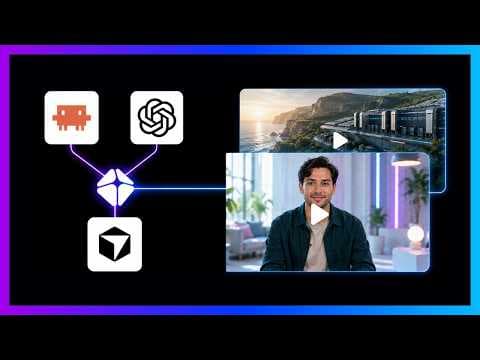
OpenMontage is trending because it treats video production like a repo-shaped agent workflow: scripts, assets, render pipelines, review loops, and coding agents working across the whole process.
Most AI video coverage is obsessed with the wrong surface.
The question is usually: which model generates the best clip?
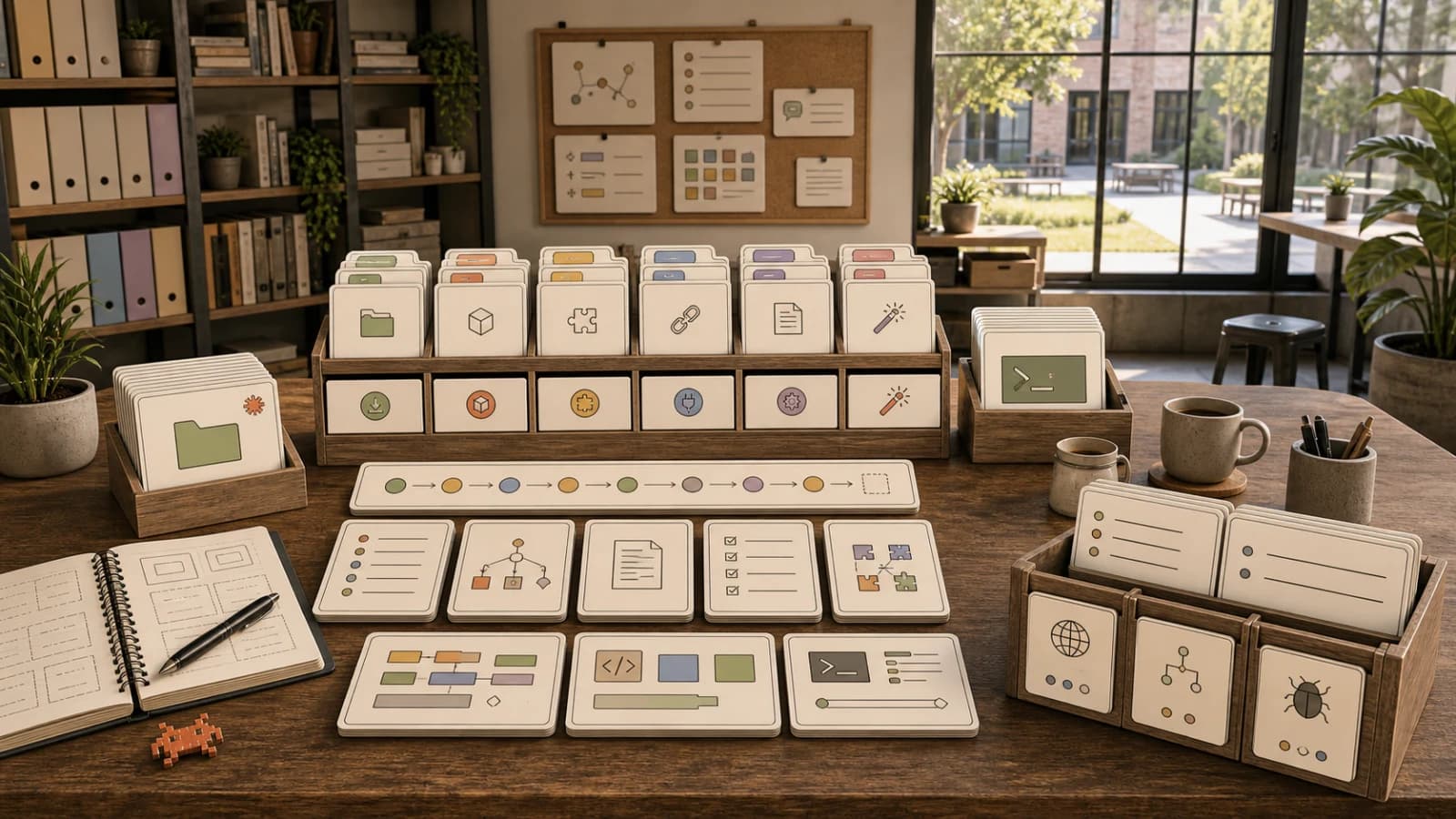
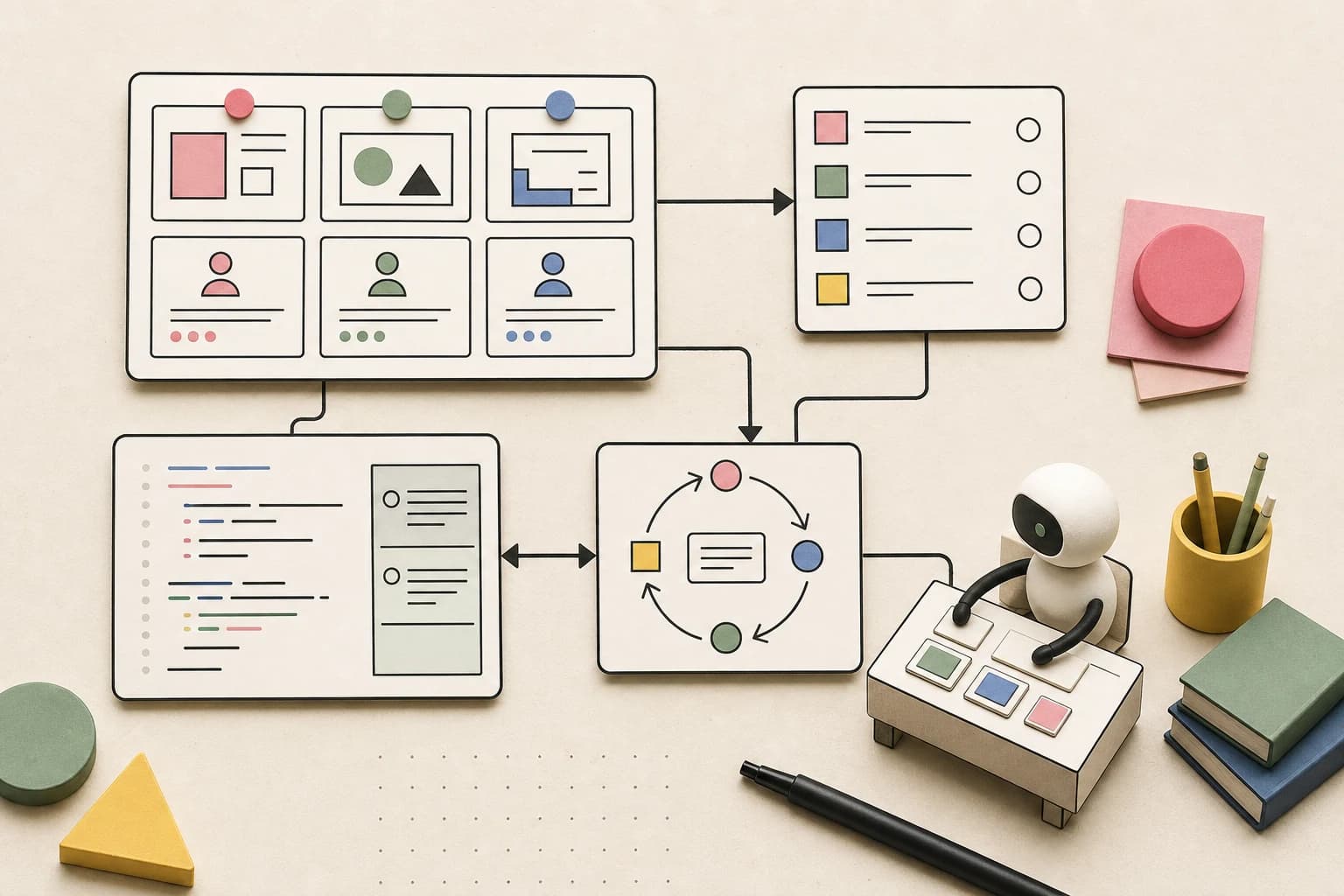
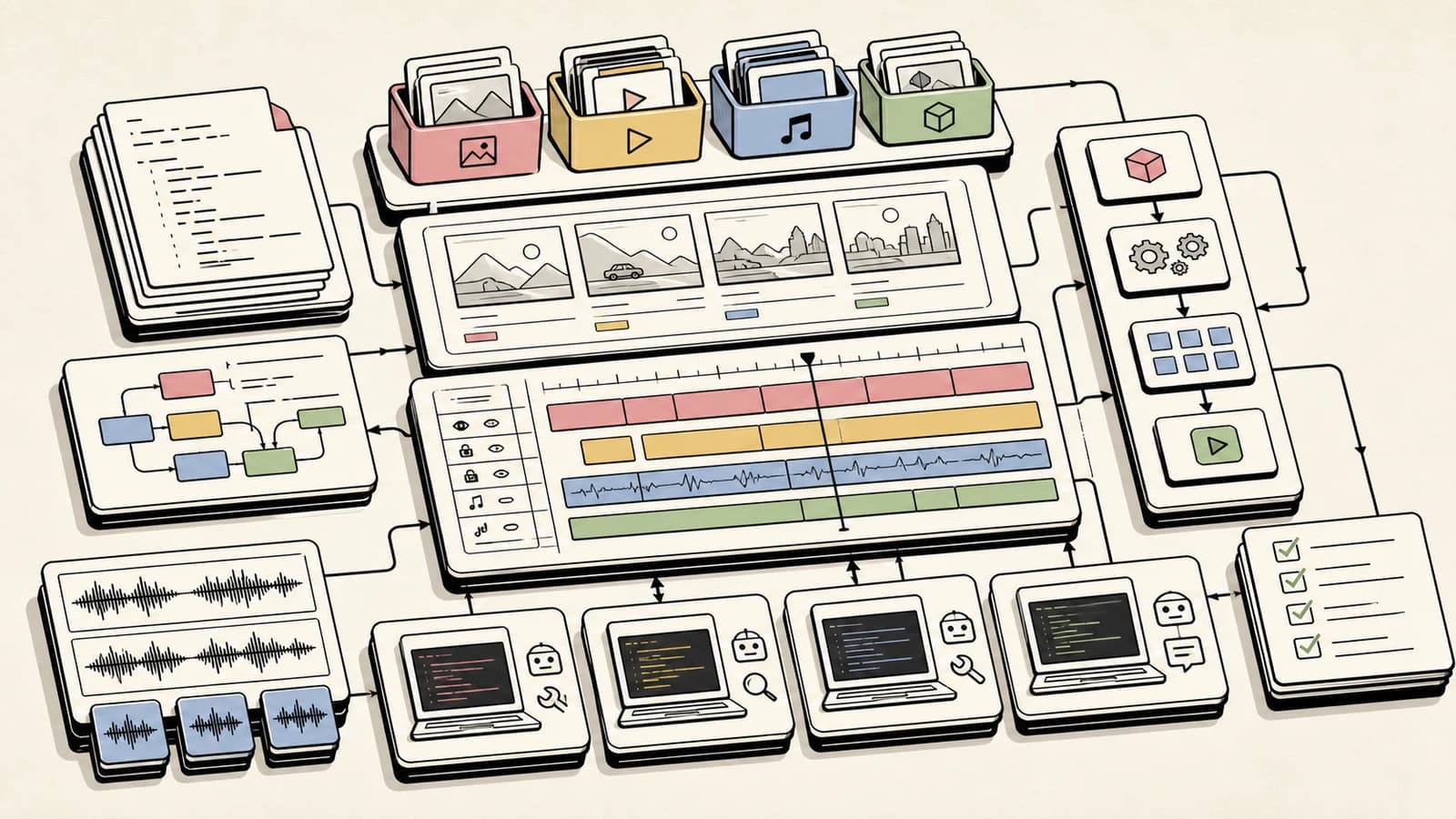
OpenMontage points at a more interesting shift: video production is becoming a repo-shaped agent workflow. The important pieces are not only pixels and frames. They are scripts, assets, timelines, renders, review notes, file conventions, and agents that can operate the whole pipeline.
Last updated: June 23, 2026
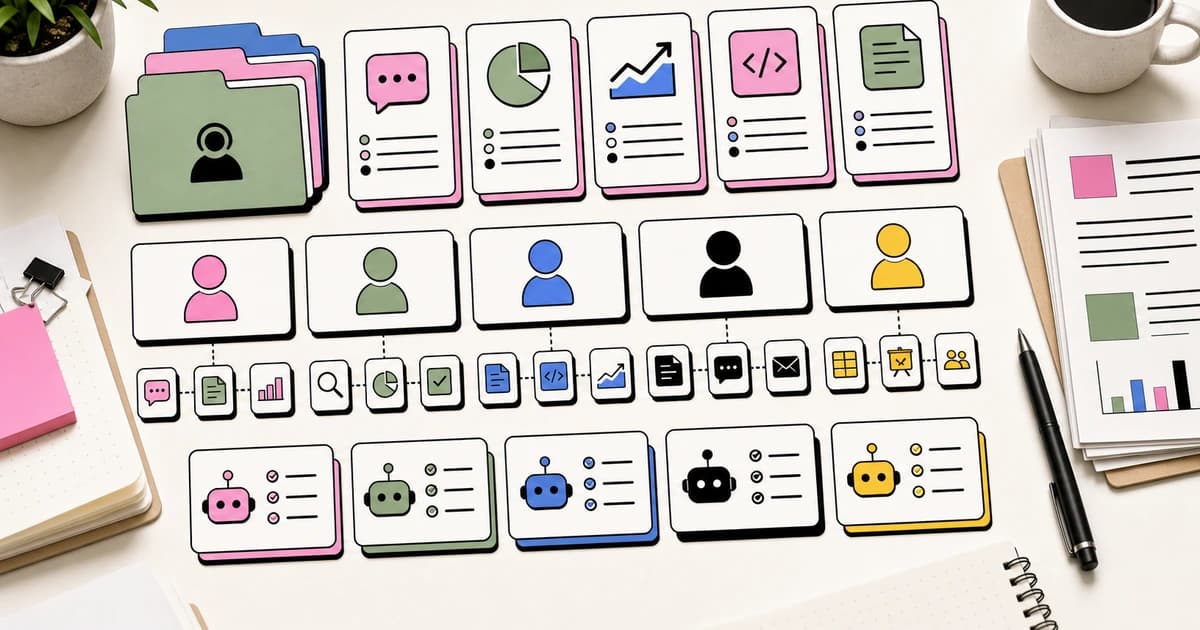
OpenMontage is trending on GitHub today, and its README describes it as an open-source agentic video production system with 12 pipelines, 52 tools, and 500+ agent skills. The project says it works with Claude Code, Cursor, Copilot, Windsurf, and Codex, with prerequisites including Python, FFmpeg, Node.js, and an AI coding assistant.
That is the story. Not "AI video replaces editors." More like: video work is moving closer to software work.
Why This Is Different From AI Video Hype#
AI video hype usually starts with a text box and ends with a clip.
That is useful for ideation, but production is a lot messier:
| Production object | Why agents care |
|---|---|
| script | can be versioned, revised, and split into scenes |
| assets | need filenames, rights, dimensions, and reuse rules |
| timeline | has structure, dependencies, durations, and tracks |
| audio | needs cleanup, pacing, captions, and sync |
| render scripts | can be automated, tested, and retried |
| review notes | can become concrete edits instead of vague comments |
| distribution exports | need formats, thumbnails, titles, descriptions, and metadata |
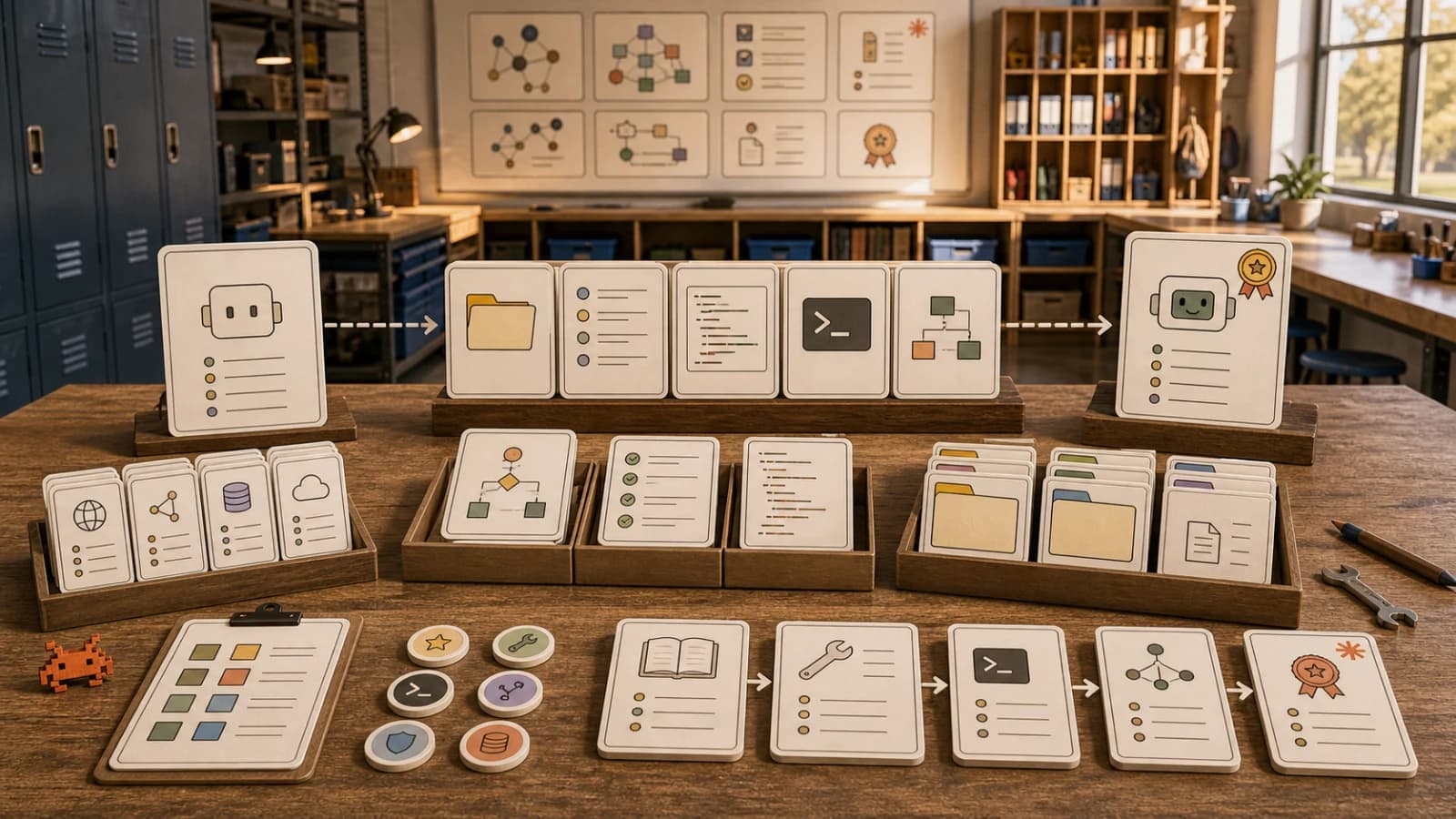
That is why OpenMontage belongs next to posts like skills are how agents learn the job and the agent skills production checklist. A useful production agent does not just know how to call a model. It knows the local job.
For video, the local job is full of structured work.
The Repo-Shaped Video Studio#
The most practical AI video workflow looks less like a magic editor and more like a small software project.
You have:
- a source script
- a scene list
- asset folders
- voiceover files
- caption files
- render templates
- export targets
- review notes
- distribution drafts
- a changelog of what changed
That is exactly the kind of surface coding agents can operate on. They can read files, revise markdown, update JSON, run scripts, inspect errors, split work into steps, and keep state in the repository.
This is the same reason the best Claude Code skills are not just clever prompts. They package repeatable work. The unit is not "make a video." The unit is "turn this script into a scene plan," "generate missing caption timing," "rerender this section," or "prepare three distribution exports."
Small, reviewable jobs beat one giant autonomous promise.
Why Coding Agents Fit Video Production#
Video production has an unusual mix of creative judgment and mechanical repetition.
Humans should still own taste: pacing, tone, narrative, humor, and whether the final thing is worth publishing. But a lot of the workflow is procedural:
- normalize filenames
- generate a scene manifest
- split a transcript into caption chunks
- verify every asset exists
- run FFmpeg
- inspect render logs
- update a storyboard
- produce social clips
- create a thumbnail brief
- write distribution copy
That explains why OpenMontage lists compatibility with coding agents rather than positioning itself as only a web editor. The agent does not need a timeline UI if the pipeline exposes enough of the work as files, scripts, and structured instructions.
This is also where taste skills for AI agents matter. A video agent can produce a lot of output quickly. Without taste constraints, it can also produce a lot of generic sludge quickly. The production system needs review gates, not only generators.
What Developers Should Copy#
Even if you never use OpenMontage, the pattern is useful.
If you make technical videos, demos, course clips, or product walkthroughs, start by making the workflow legible to agents:
- Put each video in its own folder.
- Keep the script in markdown.
- Store scene metadata in JSON or YAML.
- Use stable asset names.
- Keep render commands in scripts.
- Save review notes as files.
- Track distribution drafts beside the source.
- Make every output reproducible from repo state.
That gives an agent something concrete to operate.
It also gives humans a clean review surface. You can inspect the script diff, scene manifest, caption file, render command, and export folder separately instead of judging one opaque "AI made a video" blob.
For a smaller example, the AI podcast generator post already shows how media production becomes more useful when it is broken into data, script, voice, and export steps. OpenMontage pushes the same idea further into video.
Where This Can Go Wrong#
The contrarian take: "500+ skills" is not automatically a moat.
A large skill library can be impressive, but production quality depends on a smaller set of things:
- Are the workflows reproducible?
- Are assets tracked?
- Are render failures recoverable?
- Are rights and provenance visible?
- Are captions reviewed?
- Are edits tied to human notes?
- Can the final output be regenerated?
- Can the team tell what changed between versions?
Those are software questions.
That is why AI skills for knowledge work matters here. Skills are useful when they turn hidden professional judgment into explicit workflow. They are less useful when they become a pile of vaguely named commands.
The Practical Take#
OpenMontage is interesting because it treats video production as an agent-operable system.
That is the broader shift. The next useful AI video tools will not only generate clips. They will manage the boring middle: scene planning, asset checks, render automation, captions, review loops, and distribution exports.
For developers, this is the lesson to steal:
If you want agents to help with creative work, make the creative workflow file-based, testable, reviewable, and repeatable.
The future of AI video may look less like a single editor and more like a repo with a very good production crew attached.
FAQ#
What is OpenMontage?#
OpenMontage is an open-source agentic video production project that describes itself as a system with pipelines, tools, and agent skills for video workflows.
What is agentic video production?#
Agentic video production means using AI agents to operate parts of the video workflow such as scripting, asset organization, render automation, captions, review tasks, and distribution exports.
Does OpenMontage replace video editors?#
No. The useful framing is not replacement. It is workflow automation around structured production tasks, with humans still owning taste, review, and publishing decisions.
Why does this matter for developers?#
Developers are already comfortable with repo-based workflows, scripts, logs, and version control. That makes video production a natural place for coding agents when the workflow is expressed as files and commands.
Continue Reading#
- SAM 3.1: Realtime Video Segmentation in Apps
- Gemini Omni 1.1 Flash Goes GA: Scene Extension, Keyframes, 4K - the stateful video-API session model that agentic pipelines like OpenMontage chain
- TikZ Editor Is a WYSIWYG LaTeX Figure Tool Built Almost Entirely by Codex
Sources#
Get the next deep dive like this in your inbox
One email a week on AI Agents and the rest of the AI dev stack. Free.
Read next on Claude Code
Skills Are How Agents Learn the Job
Skills turn a general coding agent into a trained teammate by packaging runbooks, scripts, examples, and domain-specific judgment into reusable instructions.
7 min readBest Claude Code Skills and Plugins in 2026: Where to Find, Install, and Choose Them
The Claude Code skills and plugins hub: what skills are, where to find them (Anthropic's official marketplace, anthropics/skills, top GitHub repos), how the plugin marketplace works, the Superpowers methodology plugin, exact install commands, and the picks worth your context budget.
14 min readTaste Skills Are Turning Agent Review Into Infrastructure
GitHub trending is full of anti-slop, taste, and compound-engineering skills. The real signal is not that agents need more prompts. It is that teams are trying to make subjective review criteria executable.
8 min readTechnical content at the intersection of AI and development. Building with AI agents, Claude Code, and modern dev tools - then showing you exactly how it works.