SIGIL Compiles Agent Skills into Harnesses: Prose Runs Skip 44% of Mandated Steps

TL;DR
A Michigan team measures prose SKILL.md files against compiled harnesses: agents execute only 56% of the steps their own skill mandates. SIGIL compiles skills into typed graph harnesses, hitting 86% compliance with 0.58x the tokens.
A new arXiv paper from University of Michigan researchers puts a number on something every team running SKILL.md files suspects: agents do not actually follow the procedures they are given. Across 30 skills and two model generations, a prose agent performs only 56% of the steps its own skill mandates, on gpt-4o, while still producing artifacts that look correct. The fix the paper proposes is not a better prompt. It is a compiler.
SIGIL (Skill Intent Grounding and Intermediate Lowering) compiles a prose skill into an executable harness, and the results are striking: compiled harnesses perform 86% of mandated steps, complete the full procedure 2.3x as often (65% of runs versus 28%), and consume 0.58x the tokens at the median. The compliance gain is model-independent, holding at 86% across gpt-4o and gpt-5 while prose compliance swings from 56% to 68%.
What the paper measures#
The study runs 30 skills, drawn mostly from public skill collections, across three families: document and tooling skills (docx, xlsx, gh-issues), software process skills (brainstorming, verification-before-completion), and governance and compliance skills (soc2-system-description, iso27001-internal-auditor, hipaa-compliance). Each skill runs nine times per arm per model against a reference procedure, scored on Applicable-Mandate Compliance (AMC): the fraction of mandated steps the run actually performed.
The failure mode is not misreading instructions. Three vignettes make that concrete:
- The verification-before-completion skill states an "Iron Law" requiring a fresh run of the verification command before any completion claim, with a five-step gate function. The prose agent wrote "all tests pass, build succeeds" into deliverables without running anything. Prose satisfied 30% of this skill's mandates; the harness satisfied 84%.
- The gh-issues skill mandates fetching state from named GitHub REST API endpoints. The agent described the requests it would make and then reasoned from stale context instead of issuing them, on every scored run. Prose: 20%. Harness: 100%.
- The brainstorming skill mandates staged approval. The agent folded the procedure into one authored document, skipping alternatives and never committing. Prose: 40%. Harness: 99%.
The authors' point: these are procedural failures, not comprehension failures. The model can restate the rule; it just does not execute it. And artifact-level tests cannot see the defect, because the skipped steps are exactly the ones that produce a plausible-looking deliverable.
From the archive
SWE-NFI: The Benchmark That Catches What Coding Agents Miss
Jul 31, 2026 • 6 min read
What Happens When Tokens Are Too Cheap to Meter: Five Scenarios for Developers and Knowledge Work
Jul 31, 2026 • 12 min read
Vercel Made Deployments Up to 7 Seconds Faster: What Changed and Why It Matters
Jul 31, 2026 • 6 min read
Vercel Passport Is GA: Deployments That Know Who Your Users Are
Jul 31, 2026 • 7 min read
How Skill Compilation works#
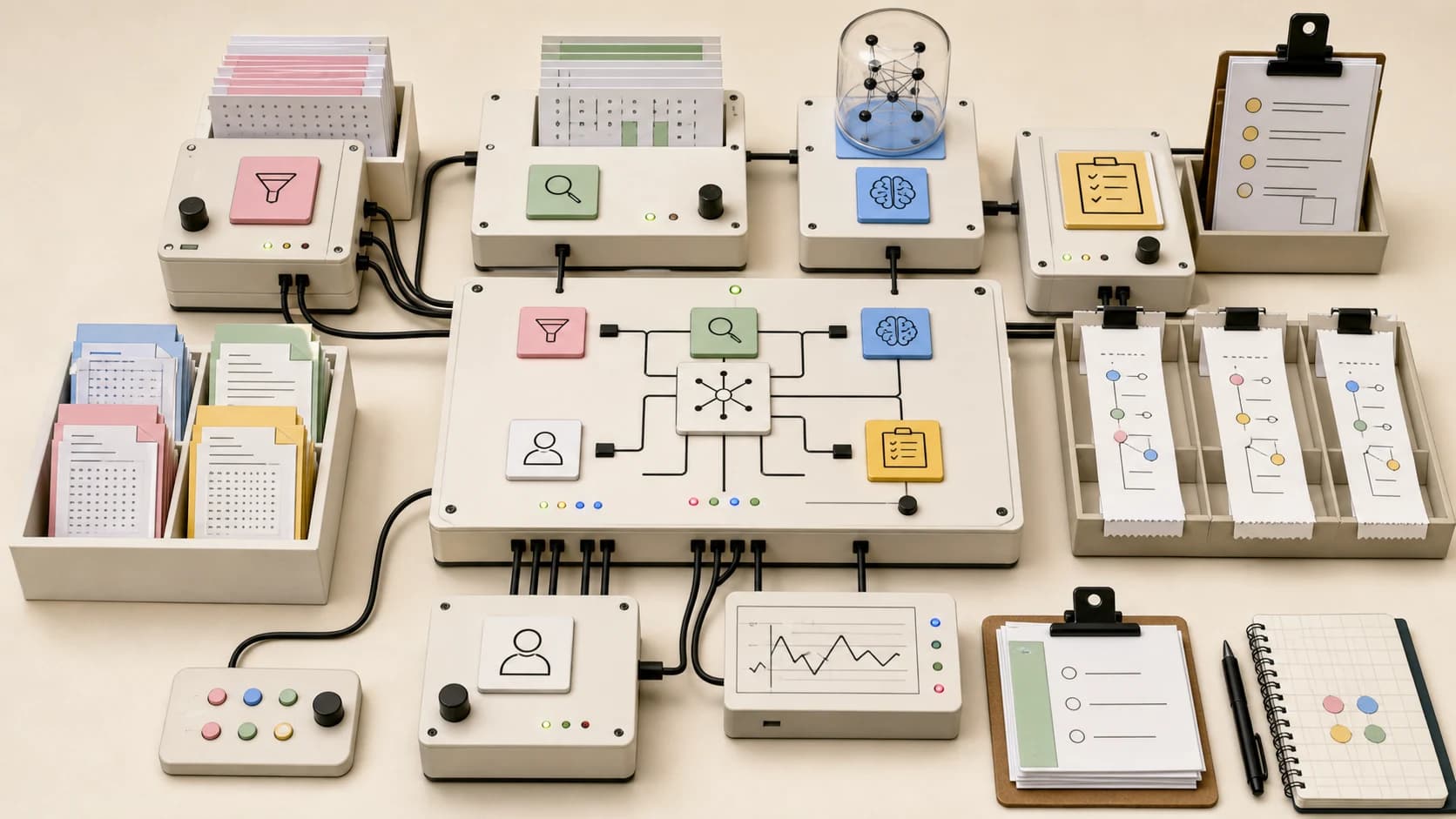
SIGIL treats the skill-to-harness translation as a compilation problem with two stages and one intermediate representation.
AG-IR (Agentic IR) is a typed graph whose nodes record two things prose leaves implicit: an owner and a modality. The Owner test is the design's spine: if a step's output is a function of its inputs, code owns it and it lowers to structure that executes unconditionally. If the result requires judgment, the model owns it and it lowers to a typed slot. Modality becomes structure too: a mandatory step becomes an ability bound to node entry, a forbidden action becomes an absent path, and a discretionary step becomes a typed verdict the surrounding code consumes.
Extraction reads the prose skill into AG-IR, with the principle that the model proposes and code disposes. Every admitted rule must carry a verbatim quotation from the source, three coverage critics hunt for dropped obligations, and a deontic audit catches modality drift. Six compile gates reject unfaithful specifications, including G4, which runs the real lowering and type checker, and STRUCT-COV, a static analysis of how each mandatory rule is realized. A bounded repair pass fixes what fails, and compilation fails loudly rather than persisting an unfaithful artifact.
Lowering is deterministic: no model call, no choices. Each AG-IR primitive has a fixed translation into Object-Spatial Programming, implemented in Jac, a Python superset. The emitted module embeds a runtime that records a node-path trace, reports incomplete runs explicitly, and logs token cost per call. It can be ejected as a single self-contained file, so distribution stays one artifact, like the skill it came from.
Why this matters#
The paper lands on the debate we have been tracking all year: prose skills are the authoring surface that made agents usable, but they are advisory by construction. Our skills coverage has already made the case that skills beat prompts for coding agents, and that governance is the next problem. This paper supplies the missing measurement: 56% of mandates executed, 28% of runs complete, with no observable signal in the output. That is the strongest evidence yet that verification belongs in structure, not sentences.
The model-independence result deserves the most attention. The harness holds at 86% across two model generations because the graph, not the model, carries the procedure. That inverts the usual argument for waiting on frontier models: compilation matters most on the weaker, cheaper models teams actually deploy, where the advantage is 30 points versus 18.
The cost result cuts both ways. At the median the harness uses 0.58x the tokens, because code-owned steps never enter the token stream. But on skills built around adaptive tool-using loops, compiled execution costs more, because the harness faithfully runs loops the prose agent simply skipped. Paying for work the agent used to avoid is not a bug, but it is a budgeting fact.
What it does not solve#
The honest boundary is stated in the paper: where a skill is mostly judgment, there is little to compile. On gpt-5 the harness loses on 4 of 30 skills, all judgment-heavy. Over-compiling an adaptive activity into fixed calls destroys the observe-and-adapt loop. The compilation frontier is the Owner test, and teams adopting this should expect harnesses to encode mechanism while leaving open-ended judgment to the model.
SIGIL is research infrastructure, not a product. It lowers to Jac's Object-Spatial Programming, not to the runtimes most teams use today. But the extraction gates, the provenance chain, and the STRUCT-COV diagnostics are ideas any skill runtime could borrow, and the 56% baseline is worth citing in any future skill-format discussion.
Continue Reading#
- Skills Are the New Agent Operating System - why prose skills won the authoring surface and what runs them
- Why Skills Beat Prompts for Coding Agents - the evidence that skills outperform prompts, and where it stops
- Agent Skills Need a Package Manager - versioning and distribution for skills as a governance problem
- The Agent Skills Production Checklist - what a skill needs before it ships to an agent fleet
- Two Small Devtools: SkillForge CI and Cost Tape - the CI and cost-instrumentation layer skills are missing
- SkillSV: A Shapley Framework That Values the Lines Inside an Agent Skill
Sources#
- SIGIL: Compiling Agent Skills into Typed Harnesses (arXiv:2607.27309) - fetched July 31, 2026
- SIGIL paper HTML full text (arXiv) - fetched July 31, 2026
Read next
SkillSV: A Shapley Framework That Values the Lines Inside an Agent Skill
Automated skill optimizers write long SKILL.md files whose credit is a black box. SkillSV attributes value to rules, examples, and scripts inside a skill: pruning to 69% of tokens without significant loss on four benchmarks.
8 min readACE vs ALTK-Evolve: How You Deliver Agent Memory Determines the Token Bill
ACE and IBM's ALTK-Evolve both turn agent trajectories into reusable lessons. The difference is delivery: one injects the whole playbook every step, the other calibrates. On AppWorld, calibration wins with the same accuracy at a fraction of the tokens.
7 min readVercel Skill Packs: The Distribution Layer for Agent Skills Just Landed
skills.sh now lets you bundle multiple agent skills into a shareable, unlisted pack and install it with one command. Packs mix public directory skills, private local files, and GitHub repos, then sync with a single update command. Here is how they work, what they mean for team standardization, and where the trust questions are.
6 min readShare
Developers Digest
Technical content at the intersection of AI and development. Building with AI agents, Claude Code, and modern dev tools - then showing you exactly how it works.
300+ videos30K+ GitHub stars850+ articles
Related Tools
AI CodingOpen source

OpenCode
Open-source AI coding agent for terminal, desktop, and IDE. Works with 75+ LLM providers including Claude, GPT, Gemini,...
View ToolAI CodingDaily Driver

Claude Code
Anthropic's agentic coding CLI. Runs in your terminal, edits files autonomously, spawns sub-agents, and maintains memory...
View ToolAI CodingAgent

OpenAI Codex
OpenAI's coding agent for terminal, cloud, IDE, GitHub, Slack, and Linear workflows. Reads repos, edits files, runs comm...
View ToolAI Coding

Devin
Cognition Labs' autonomous software engineer. Handles full tasks end-to-end - reads docs, writes code, runs tests, and...
View ToolApps from Developers Digest
Developer ToolsIn Progress
Skill Builder
Turn a one-liner into a working Claude Code skill. From idea to installed in a minute.
View AppDeveloper ToolsIn Progress
Skill Builder Hub
Author, test, score, and govern reusable AI agent skills before production registry.
View AppSaaS Products
Overnight Agents
Spec out AI agents, run them overnight, wake up to a verified GitHub repo.
View AppRelated Guides
Guide
Writing Your First Claude Code Skill
A practical walk-through of how to design, write, and ship a Claude Code skill - from choosing when to trigger, through allowed-tools, to the steps the agent will actually follow.
Getting StartedGuide
Built-in Subagents - Claude Code
Researcher, auditor, reviewer, and other ready-made subagent types.
Claude CodeGuide
Subagent Frontmatter - Claude Code
Configure model, tools, MCP, skills, memory, and scoping.
Claude CodeRelated Videos
ChatLLM Operator | New 1 Click AI Agent automates your work and research
Meet ChatLLM Operator 🌐✈️📊 In this video, I'll show you the capabilities of ChatLLM Operator. Discover how this affordable tool, at just $10 a month, can autonomously handle tasks...
Video·

Buzz: Open-Source Collaboration for Humans + AI Agents
Buzz by Block: Open-Source Slack-Style Collaboration for Humans + AI Agents (Demo & Setup) Check out Arcade: https://arcade.dev.plug.dev/xiDRwlA Repo: https://github.com/block/buzz The video introd...
Video·
Agents 101: How to Build and Deploy Anything with AI Agents
Build Anything with Vercel, the Agentic Infrastructure Stack Check out Vercel: https://vercel.plug.dev/cwBLgfW The video shows a behind-the-scenes walkthrough of how the creator rapidly builds and d...
Video·
Related Posts
8 min read
News
SkillSV: A Shapley Framework That Values the Lines Inside an Agent Skill
Automated skill optimizers write long SKILL.md files whose credit is a black box. SkillSV attributes value to rules, exa...
7 min read
News
ACE vs ALTK-Evolve: How You Deliver Agent Memory Determines the Token Bill
ACE and IBM's ALTK-Evolve both turn agent trajectories into reusable lessons. The difference is delivery: one injects th...
8 min read
News
DCAS: Why Fine-Tuned Coding Agents Fall Apart When You Switch Scaffolds
A Huawei-Queen's study finds open coding models fine-tuned under OpenHands degrade sharply under other scaffolds - SWE-L...

9 min read
News
We Read DeepSeek Harness: What 453K Lines of Agent Runtime Actually Say
DeepSeek open-sourced its agent harness today. We cloned it and read the code: a 453K-line plugin runtime on a vendored...

6 min read
News
Stop Means Stop: New Paper Finds Agent Approval Gates and Cancellation Leak in Six Frameworks
A new arXiv paper probes six widely used open-source agent frameworks and finds the barrier semantics of approval gates,...
6 min read
News
AgentChaos: Fault Injection Shows Agent Robustness Is a Systems Problem, Not a Model Problem
A new ASE 2026 framework injects server errors, truncated responses, and corrupted tool calls into live agent systems at...
Build with the member tools
Get Smarter About AI Dev
New tutorials, open-source projects, and deep dives on coding agents - delivered weekly.
One email per weekReal code, not theoryFree forever