AgentMemory Is Useful Only If You Audit What It Remembers
TL;DR
AgentMemory gives Claude Code, Codex, Cursor, and other agents persistent local memory. The real adoption question is not recall accuracy. It is whether your team can inspect, prune, and govern what gets remembered.
Last updated: June 24, 2026
The Trend Was Real. The Risk Moved.#
The older AgentMemory posts on this site treated rohitg00/agentmemory as a fast-rising GitHub Trending project. That was true, but it is not the useful part anymore.
The useful part is that agent memory has crossed from a nice demo into the control plane for daily agent work. Once Claude Code, Codex, Cursor, Gemini CLI, OpenCode, Goose, and other coding agents can all share the same persistent store, memory stops being a prompt trick. It becomes infrastructure.
As of this refresh, the GitHub API shows rohitg00/agentmemory at roughly 23.8k stars, 2k forks, Apache-2.0 licensed, TypeScript-first, and pushed on June 22, 2026. The latest GitHub and npm release is v0.9.27, published June 7, 2026.
That makes the old dated posts a weak search surface. The durable question is sharper: should your agent remember everything, and who audits the memory after it does?
This connects directly to AI agent memory patterns, long-running agents needing harnesses, agent workspaces needing filesystem contracts, and agent swarms needing receipts. Memory is not separate from the harness. It is one of the harness's highest-leverage and highest-risk parts.
It also belongs next to agent memory benchmarks not being enough, agent memory context ledgers, and codebase knowledge graphs for AI coding agents. Retrieval is useful only when the team can explain why a fact came back.
What AgentMemory Actually Adds#
AgentMemory runs a local memory server for coding agents. It exposes REST on port 3111, a viewer on port 3113, and an MCP surface for compatible clients. The current README says it works across Claude Code, Codex CLI, GitHub Copilot CLI, Cursor, Gemini CLI, OpenCode, Cline, Goose, Aider, Claude Desktop, Windsurf, Zed, Warp, and more.
The project has expanded since the older posts:
- 53 MCP tools, not the older 51-tool framing
- a 7-tool fallback if the MCP shim cannot reach the running server
- 128 REST endpoints behind the local server
- 12 auto hooks for Claude Code
- native Codex plugin support with hooks plus MCP
- 15 native skills installed through
npx skills add rohitg00/agentmemory -y - 1,423+ tests shown in the current README badge
- local storage under
~/.agentmemory - managed iii-engine binary under
~/.agentmemory/bin - local hybrid retrieval with BM25 plus on-device embeddings by default
- optional richer summaries and auto-injection when provider keys are configured
- a real-time viewer for sessions, memory, and graph inspection
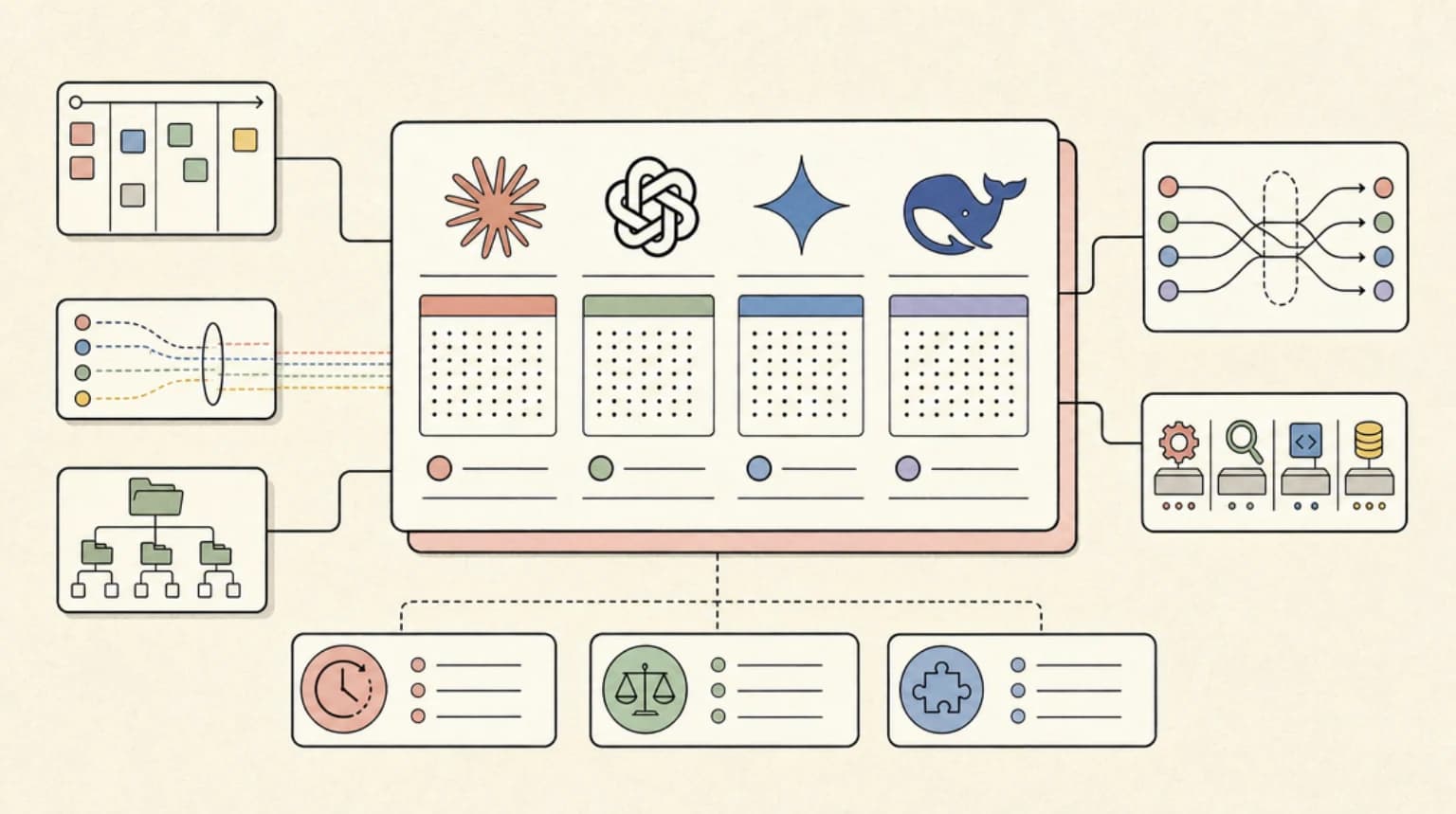
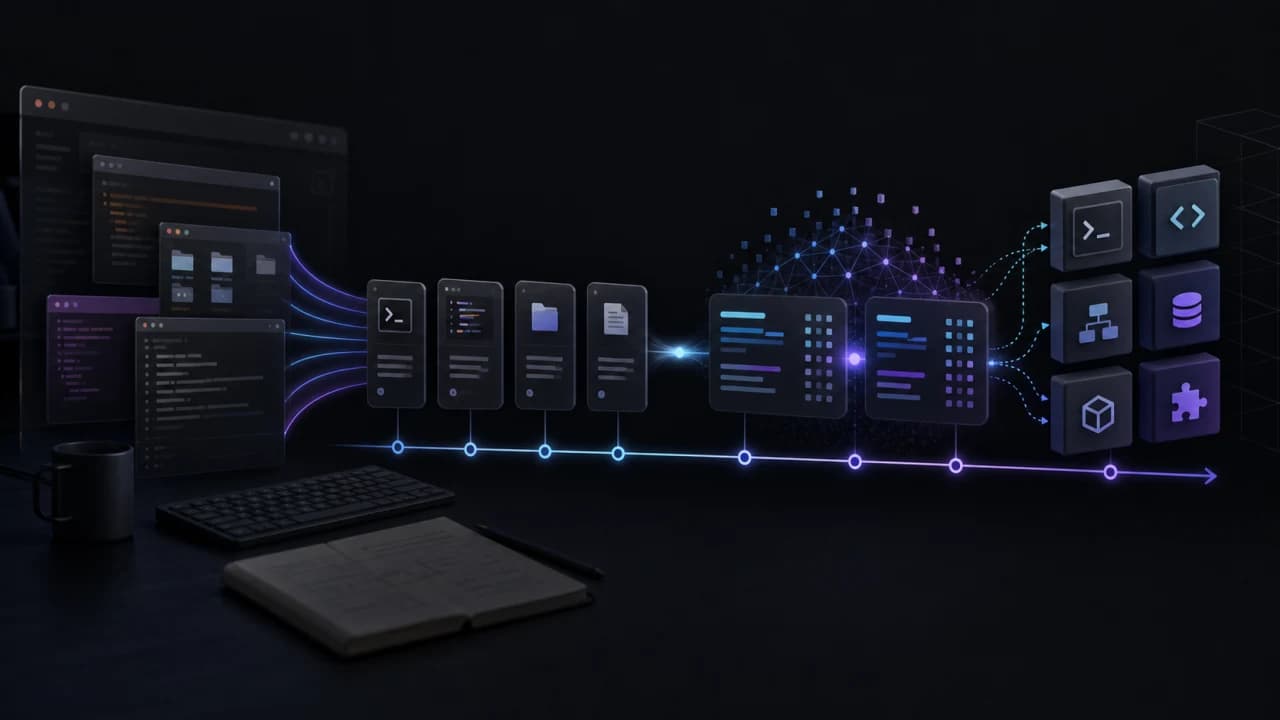
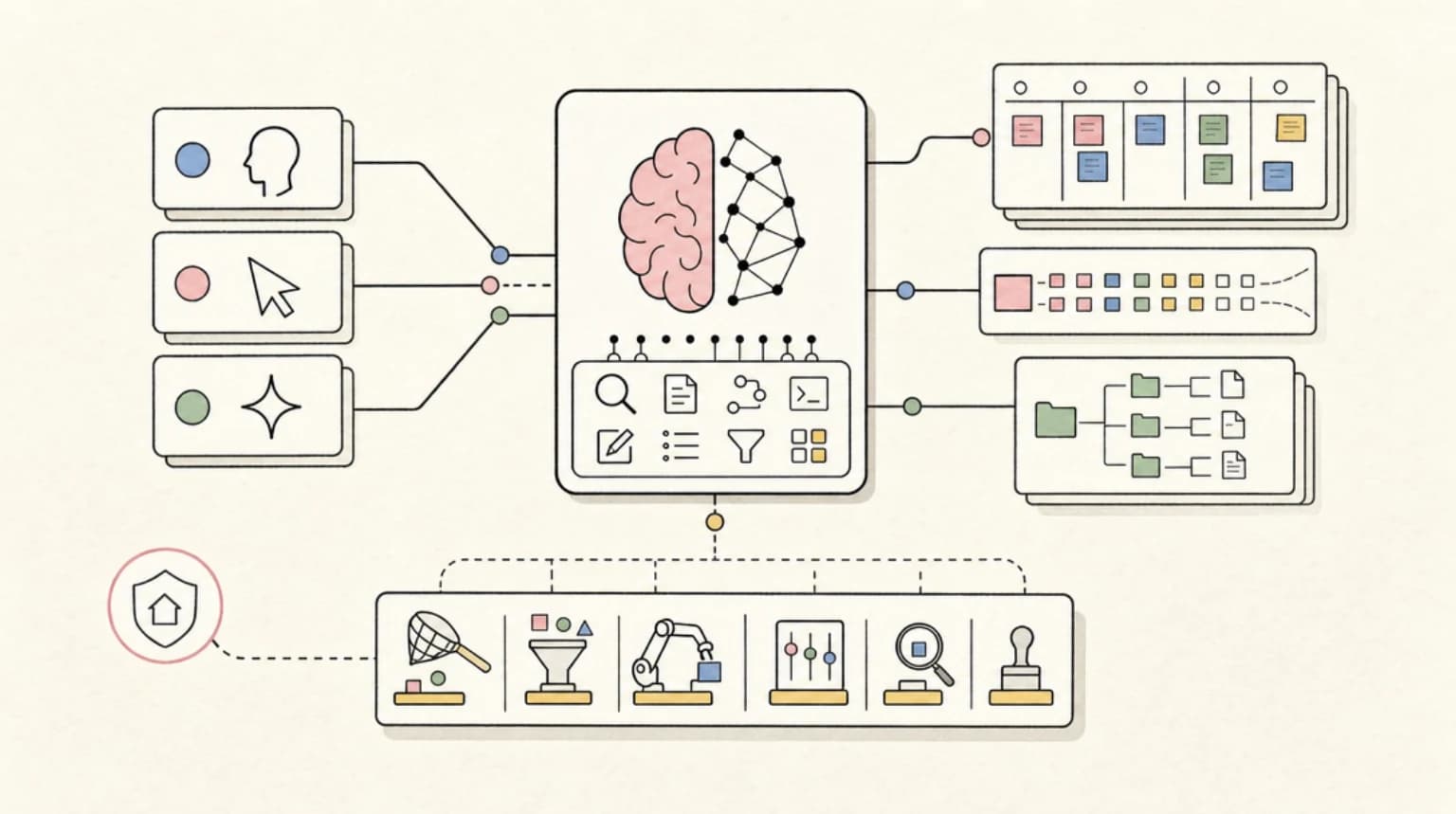
The architecture is still easy to understand. AgentMemory captures observations from agent sessions, stores them locally, and retrieves relevant context later. The README describes a memory model around working context, episodic session summaries, semantic facts, procedural workflows, and graph-like relationships.
That is the right shape for agent work. A coding agent should not need to rediscover your test command, package manager, review style, migration rule, or project vocabulary every morning.
The Benchmark Claim Needs A Footnote#
The old posts repeated the strongest numbers too bluntly: high retrieval scores, large token-savings claims, test counts, and tool-count claims that have since changed.
The current README still advertises 95.2 percent retrieval R@5 and 92 percent fewer tokens, but its comparison note is more careful. It says AgentMemory's own R@5 result is measured on LongMemEval-S and reproducible from benchmark/COMPARISON.md, while several competitor figures are from different datasets or vendor-reported sources. That matters.
Benchmarks are useful for deciding whether a project is serious. They are not enough to decide whether your repo should trust the memory store.
The better adoption test is local:
- run the demo
- connect one non-sensitive repo
- inspect what gets captured
- search for a known project decision
- verify the retrieved memory is accurate
- delete or prune bad memory
- repeat after a week of real work
If the memory is useful and inspectable, keep going. If it confidently retrieves stale decisions, you have a new failure mode.
Install Path Matters#
The older posts led with a simple npx command. That still works, but the current docs recommend a more deliberate path because npx can cache older versions.
For a stable install:
npm install -g @agentmemory/agentmemory
agentmemory
agentmemory demo
agentmemory connect claude-code
npx skills add rohitg00/agentmemory -y
For a no-install trial, force the latest package:
npx -y @agentmemory/agentmemory@latest
The official agent runbook says default mode needs no API key and no cloud account. It uses local BM25 plus on-device embeddings out of the box, and optional provider keys unlock richer summaries and auto-injection.
The current runbook also matters for operations: Node 20 or newer is required, ports 3111, 3112, 3113, and 49134 need to be free, and the one-command path is macOS/Linux first. Windows users are pointed toward WSL2, with native Windows setup described as manual.
One detail to keep straight: capture and injection are different. The current docs describe auto-capture hooks, but AGENTMEMORY_INJECT_CONTEXT is off by default. That is the safer default. It lets you inspect recall quality before memory starts shaping every prompt automatically.
The Good Adoption Pattern#
AgentMemory is most useful when it remembers boring facts that agents otherwise re-learn badly:
- the package manager and test command
- route and directory conventions
- migration rules
- code review preferences
- architectural decisions
- recurring failure modes
- project-specific vocabulary
- known flaky tests and their owner
- deployment and verification rituals
That overlaps with Claude Code, Codex, and DD Traces workflows because all three benefit from durable receipts. The memory store should not replace AGENTS.md, CLAUDE.md, tests, traces, or final reports. It should make the agent better at finding the right part of those surfaces.
The strongest pattern is not "remember everything." It is "remember small, inspectable facts with provenance."
That is also the clean comparison against local code graph indexes, agent context reduction patterns, and the best MCP server shortlist. Code graphs are better for structure. Context reduction is better for shrinking active runs. CLAUDE.md is better for stable rules. AgentMemory is better when useful facts emerge from repeated sessions and need to survive across tools.
For a team, that means the viewer and audit trail matter as much as retrieval quality. If memory affects agent behavior, memory needs review.
The Opposing View#
Persistent memory can make agents worse.
A memory tool can preserve a wrong assumption, a temporary workaround, a stale branch name, a one-off debugging hack, or a sensitive note that should never have been reusable context. Unlike a bad prompt, a bad memory can keep coming back until someone notices and deletes it.
There are also operational risks:
- a local daemon adds another moving part to the agent setup
- 53 MCP tools is a large permission surface
- auto hooks can capture more than the user expected
- auto-injection can amplify stale context if enabled too early
- team-shared memory needs access boundaries
- benchmark wins may not predict your repo's retrieval quality
There is also a supply-chain angle. Plugins, hooks, skills, and agent config files are no longer passive metadata. If AgentMemory is installed through a plugin or wired into MCP, it belongs in the same review bucket as Claude Code plugin URL supply-chain risk and agent config files that run code.
The current changelog is a useful signal here. The v0.9.27 release included an agent-scope isolation security fix for recall paths, plus fixes around large graph corpora, data persistence on stop/restart, multi-instance port collisions, and pinned iii console installation. That is not a reason to avoid the project. It is a reason to treat memory as production infrastructure, not a toy cache.
The Take#
AgentMemory is worth trying because it attacks one of the most annoying parts of coding-agent work: the daily context reset.
But the bar should be higher than "it remembered something." The bar is "it remembered the right thing, showed me where it came from, let me delete it, and did not leak it across the wrong agent or project."
Start with one repo. Keep auto-injection off until you trust retrieval. Inspect the viewer. Prune bad memories. Then decide whether persistent agent memory belongs in the harness.
The win is not that your agent remembers everything.
The win is that your agent remembers less, better.
FAQ#
What is AgentMemory?#
AgentMemory is an open-source local memory server for coding agents. It stores observations from agent sessions, exposes memory through MCP and REST, and gives tools like Claude Code, Codex, Cursor, Gemini CLI, and OpenCode a shared persistent context layer.
What version is current?#
As of this refresh, GitHub releases and npm both show @agentmemory/agentmemory at 0.9.27, published June 7, 2026.
Does AgentMemory need a cloud account?#
No. The official runbook says default mode needs no API key and no cloud account. It runs local hybrid retrieval with BM25 plus on-device embeddings. Provider keys are optional for richer summaries and auto-injection behavior.
How many MCP tools does AgentMemory expose?#
The current docs and agent runbook describe 53 tools when the full server is reachable. Older posts on this site said 51, which was stale.
Does AgentMemory replace CLAUDE.md?#
No. CLAUDE.md and AGENTS.md are better for stable project rules. AgentMemory is better for session-derived observations, repeated debugging context, and cross-agent recall that changes over time.
Should I enable automatic context injection immediately?#
No. Start with capture and manual recall. Enable injection only after you have inspected retrieved memories on a real repo and confirmed the store is accurate enough for your workflow.
What is the main risk?#
The main risk is stale or over-broad memory influencing future agent behavior. Persistent memory should have inspection, pruning, scope boundaries, and receipts, just like any other part of an agent harness.
What should I compare AgentMemory against?#
Compare it against a lighter memory system made from AGENTS.md, CLAUDE.md, project-local skills, final receipts, traces, and small markdown notes. If AgentMemory saves repeated re-orientation without adding review risk, it earns its place.
Sources#
Get the next deep dive like this in your inbox
One email a week on Claude Code and the rest of the AI dev stack. Free.
Read next on Claude Code
What Hacker News Gets Right About AI Coding Agents in 2026
Hacker News keeps arguing about Claude Code, Codex, skills, MCP, and orchestration. Under the noise, the same four truths keep surfacing: workflows matter more than demos, verification is the bottleneck, skills beat prompts, and orchestration matters more than raw autonomy.
11 min readWhat Is OpenClaw? Setup, Skills, MCP Server, Claude Code, and Ollama (2026 Guide)
OpenClaw is an open-source, self-hosted personal AI agent you run on your own machine and reach through chat apps like Telegram, Slack, Discord, and WhatsApp. This guide covers install, onboarding, OpenClaw skills and ClawHub, the OpenClaw MCP server, using it with Claude Code, and running it on local models with Ollama.
12 min readAgentCanvas is a visual adapter for Claude Code and Codex
Claude Code and Codex both ship great agents and terrible transcripts. AgentCanvas is a visual adapter that puts the artifacts, decisions, and handoffs on one board so the next agent and the next human can see them.
6 min readTechnical content at the intersection of AI and development. Building with AI agents, Claude Code, and modern dev tools - then showing you exactly how it works.