How to Use Claude Fable 5: Every Access Path Explained
TL;DR
How to use Claude Fable 5 across every access path: claude.ai plans through June 22, the Claude API, Amazon Bedrock, Vertex AI, and Microsoft Foundry, with setup effort and first-prompt tips.
Last updated: June 11, 2026
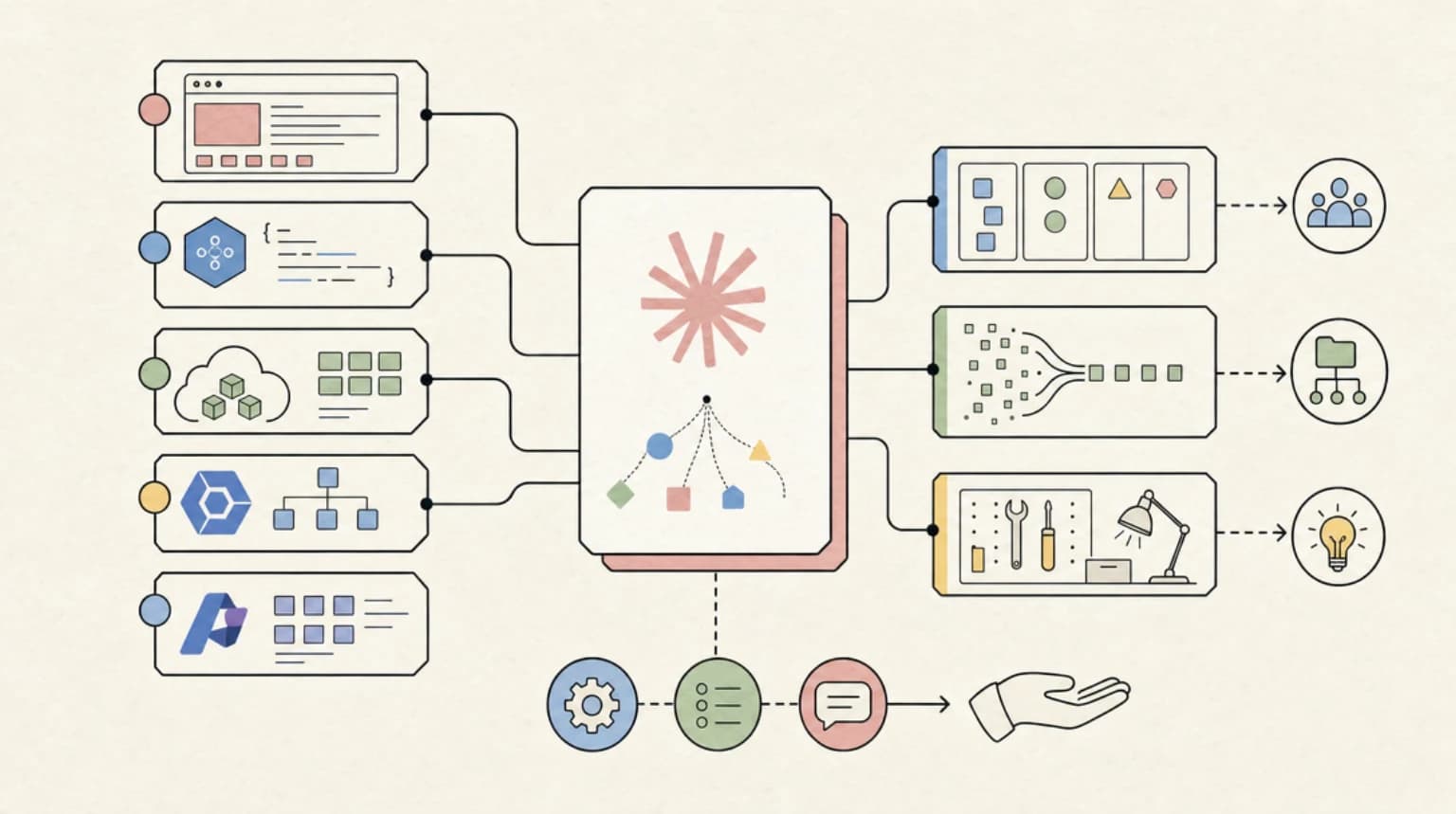
Claude Fable 5 went generally available on June 9, 2026, with five ways to reach it: subscription plans in the Claude apps, the first-party Claude API, Amazon Bedrock (plus the separate Claude Platform on AWS), Google Vertex AI, and Microsoft Foundry. Each path has its own model ID, setup cost, and feature surface - and one is on a clock, because plan access changes on June 23. Here is every option, plus the first-prompt habits that get good output on day one.
The Quick Answer: Every Access Path#
| Access path | Model ID | Setup effort | Best for |
|---|---|---|---|
| claude.ai plans (Pro, Max, Team, Enterprise) | pick it in the model selector | None | Trying it before June 22 |
| Claude API | claude-fable-5 | Low: API key | Production apps and agents |
| Claude Platform on AWS | claude-fable-5 | Low to medium | AWS billing, first-party features |
| Amazon Bedrock | anthropic.claude-fable-5 | Medium: IAM setup | AWS security boundary workloads |
| Vertex AI | claude-fable-5 | Medium: GCP project + gcloud auth | GCP shops |
| Microsoft Foundry | claude-fable-5 (default deployment name) | Medium: resource + deployment | Azure shops |
Specs match everywhere: 1M context window, up to 128K output tokens per request, $10/$50 per million input/output tokens, per Anthropic's models overview. One caveat: Fable 5 uses the Opus 4.7 tokenizer, which yields roughly 30% more tokens for the same text than pre-4.7 models. Full cost math: Fable 5 cost-per-task analysis.
Path 1: claude.ai Plans (and the June 22 Mechanics)#
The fastest way in is an existing subscription. Per Anthropic's launch announcement: "From today through June 22, Fable 5 is included on Pro, Max, Team, and seat-based Enterprise plans at no extra cost." You select it from the model picker like any other Claude model.
The catch is the next sentence: "On June 23, we'll remove Fable 5 from those plans. Using it after that will require usage credits." Anthropic intends to restore plan access when capacity allows, with advance notice. Plan prices are unchanged - Pro is $20 per month ($17 annually), Max from $100, per claude.com/pricing - but after June 22, plan price alone no longer covers Fable 5.
The practical move: test your hardest real workload during the free window so you know whether the model is worth buying credits for, a decision we broke down in the June 22 deadline explainer. The window applies to seat-based plans only; on the Claude API and consumption-based Enterprise plans, Fable 5 is fully available with no deadline.
Path 2: The Claude API#
The lowest-friction path for developers. The model ID is claude-fable-5, and a request looks like any other Messages API call, with one addition: control thinking depth via "output_config": {"effort": "high"} rather than thinking budgets.
Three API behaviors differ from Opus 4.8, per the Introducing Claude Fable 5 docs:
- Adaptive thinking is always on.
thinking: {"type": "disabled"}is not supported. - Raw chain of thought is never returned. Set
thinking.display: "summarized"for a readable summary; the default returns empty thinking fields. - Refusals are a response shape, not an error. Fable 5 ships safety classifiers, and a declined request returns HTTP 200 with
stop_reason: "refusal". Retry on another model via the server-sidefallbacksparameter (beta, Claude API and Claude Platform on AWS only), SDK middleware, or a manual retry with fallback credit; see our fallback API guide.
Compliance note: Fable 5 is a Covered Model with mandatory 30-day data retention and is not available under zero data retention. Moving existing Opus 4.8 code over? The Fable 5 migration guide lists everything that breaks.
Path 3: Amazon Bedrock and Claude Platform on AWS#
There are two AWS paths, and they differ.
Claude in Amazon Bedrock runs on AWS-managed infrastructure with zero operator access, which is the point: traffic stays inside the AWS security boundary. Fable 5 is open to all Bedrock customers as anthropic.claude-fable-5, per Anthropic's Bedrock docs, using the same Messages API request body as first-party (pip install "anthropic[bedrock]" gives the AnthropicBedrockMantle Python client). Auth runs through a Bedrock service role, IAM assumed roles, or bearer tokens. The global endpoint carries no premium; regional endpoints for data residency cost 10% more. Default quota is 2M input tokens per minute.
The tradeoffs: no server-side fallbacks parameter (use client-side fallback), no Message Batches, no Files API, no server-side tools like code execution or web search. If data boundaries brought you here, see the Bedrock data boundary post.
Claude Platform on AWS is the Anthropic-operated alternative with AWS Marketplace billing, typically same-day feature access, and first-party model IDs (claude-fable-5), and it is the only non-first-party surface where the server-side fallback beta works.
From the archive
Is Claude Fable 5 Slow? Latency in Practice, and When It Matters
Jun 11, 2026 • 8 min read
Managing a Fleet of Claude Agents: A Practical Guide
Jun 11, 2026 • 10 min read
Migrating Off Retired GPT Models in 2026: A Working Checklist
Jun 11, 2026 • 10 min read
Qwen 3.7 Max Developer Guide: 1M Context, $1.25/MTok, and Agent-First Architecture
Jun 11, 2026 • 8 min read
Path 4: Google Vertex AI#
On Vertex AI the model ID is plain claude-fable-5, but the request shape differs in two ways, per Anthropic's Vertex docs: the model goes in the endpoint URL, not the body, and the body must include anthropic_version: "vertex-2023-10-16". The SDKs hide both details (AnthropicVertex in Python, @anthropic-ai/vertex-sdk in TypeScript), so most code only changes its client constructor.
Vertex offers three endpoint types: global (recommended, no premium), multi-region us/eu, and single-region, the latter two at a 10% premium. Fable 5 keeps its full 1M context window. Like Bedrock, Vertex lacks server-side fallback and Message Batches, though it does support the web search tool. One practical limit: request payloads cap at 30 MB.
Path 5: Microsoft Foundry#
Foundry is the Azure path, and it adds one concept the others lack: deployments. You create a Foundry resource, deploy claude-fable-5 inside it, and the deployment name (defaults to the model ID) becomes your model parameter, per Anthropic's Foundry docs. Endpoints look like https://{resource}.services.ai.azure.com/anthropic/v1/messages, auth is an Azure API key or Entra ID, and billing flows through the Microsoft Marketplace at Anthropic's standard rates.
Worth knowing: Fable 5 gets the full 1M context window on Foundry, while Opus 4.8 is limited to 200K there. Foundry lacks the Models API, Message Batches, and server-side fallback, and only the C#, Java, PHP, Python, and TypeScript SDKs cover it.
Which Path Fits You#
- Already paying for Pro or Max: use the model picker now. The window closes June 22; it is the only zero-setup option.
- Building a product or agent: the Claude API. Full feature surface, including the server-side fallback beta, Message Batches, and the Files API, and it gets features first.
- AWS team with strict data boundaries: Bedrock. Accept missing server-side features in exchange for traffic that never leaves AWS.
- AWS team wanting consolidated billing: Claude Platform on AWS keeps first-party features and Marketplace invoicing.
- GCP or Azure standardized org: Vertex AI or Foundry respectively. Same model, same pricing, native auth and billing.
- ZDR-bound org: none, directly. Fable 5 requires 30-day retention on the first-party API; talk to your account team before assuming access.
First Prompts: Getting Good Output on Day One#
Effort is the main knob. Per Anthropic's effort docs, Fable 5 supports low, medium, high (the default), xhigh, and max: start at high, reserve xhigh for capability-sensitive work, drop to medium or low for routine tasks. Lower effort settings on Fable 5 "often exceed xhigh performance on prior models" per the same docs - do not assume you need the top of the dial. More tuning detail in the effort levels guide.
Beyond effort, the official prompting guide suggests habits that differ from older Claude models:
- Start at the top of your difficulty range. Testing Fable 5 only on simple workloads undersells it. Hand it something you would not have given Opus 4.8.
- Expect longer turns. Requests can run for many minutes at higher effort, and autonomous runs can extend for hours. Raise client timeouts and use streaming early.
- Give the reason, not just the request. The model performs better when it knows why you are asking and who the output is for.
- Never ask it to show its reasoning. Echo-your-reasoning prompts can trigger the
reasoning_extractionrefusal category and elevate fallbacks to Opus 4.8. Read the structured thinking blocks instead. - De-bloat your prompts and skills. Instructions written for prior models are often too prescriptive and can degrade output. See rewriting prompts and skills for Fable 5.
When to Skip Fable 5#
Honest version: most workloads do not need this model. At double Opus 4.8's token rates (before the tokenizer difference), Fable 5 earns its premium on long-horizon, multi-file, autonomous work - not interactive chat, quick lookups, or high-volume routine tasks where Opus 4.8 or Sonnet 4.6 are faster and cheaper. Routing logic: Fable 5 vs Opus 4.8: when to use which.
Also skip it if your work sits in the classifier zones. The safeguards target offensive cybersecurity, biology and life sciences content, and reasoning extraction, and Anthropic's docs note benign work in those areas can trigger false positives. Anthropic reports over 95% of sessions involve no fallback, but if your product is security tooling or bio research, plan for refusals or use Opus 4.8 directly. The unrestricted sibling, Claude Mythos 5, is Project Glasswing-only - see what Claude Mythos 5 is and who gets it.
FAQ#
How do I use Claude Fable 5?#
The short version of how to use Claude Fable 5: on a Pro, Max, Team, or seat-based Enterprise plan, select it in the claude.ai model picker (included at no extra cost through June 22, 2026). For code, call the Claude API with model ID claude-fable-5, use anthropic.claude-fable-5 on Amazon Bedrock or claude-fable-5 on Vertex AI, or deploy it in Microsoft Foundry. Same specs everywhere: 1M context, 128K max output, $10/$50 per million tokens.
Is Claude Fable 5 free?#
Not exactly. It is included at no extra cost on Pro, Max, Team, and seat-based Enterprise plans through June 22, 2026. On June 23 Anthropic removes it from those plans, and continued use requires usage credits. There is no free-tier access; API use is pay-per-token from day one.
What is the Claude Fable 5 model ID on each platform?#
Claude API and Claude Platform on AWS: claude-fable-5. Amazon Bedrock: anthropic.claude-fable-5. Vertex AI: claude-fable-5 (in the endpoint URL, not the body). Microsoft Foundry: the deployment name, defaulting to claude-fable-5.
Can I use Claude Fable 5 with zero data retention?#
No. Fable 5 is a Covered Model requiring 30-day retention and is not available under zero data retention on the Claude API. On Bedrock, Vertex, and Foundry, data handling is governed by each cloud platform.
Does Claude Fable 5 work the same on Bedrock, Vertex AI, and Foundry?#
Model and pricing are identical; the feature surface is not. The server-side fallbacks beta only works on the Claude API and Claude Platform on AWS; other platforms need client-side fallback via SDK middleware. None of the three partner clouds offer Message Batches, and Bedrock and Vertex also lack the Files API. Vertex supports web search; Bedrock does not. All platforms give Fable 5 the full 1M context window.
Sources#
All accessed June 11, 2026.
- Anthropic launch post: Claude Fable 5 and Claude Mythos 5
- Anthropic docs: Models overview
- Anthropic docs: Introducing Claude Fable 5 (API changes)
- Anthropic docs: Prompting Claude Fable 5
- Anthropic docs: Effort
- Anthropic docs: Claude in Amazon Bedrock
- Anthropic docs: Claude on Vertex AI
- Anthropic docs: Claude in Microsoft Foundry
- Claude pricing (plans)
Read next
12 Ways Developers Are Actually Leveraging Claude Fable 5
Twelve documented Claude Fable 5 use patterns - agent orchestration, overnight runs, 1M-context refactors, effort tuning - each with a how-to seed and doc link.
10 min readClaude Opus 5 in 8 Minutes: What Developers Need to Know
Claude Opus 5 ships today with Frontier-Bench SOTA, near-Fable-5 coding at half the price, and self-verification that catches its own bugs. Here is what changed, what to migrate, and when the price-performance curve makes Opus 5 the right default.
7 min readThe Claude Tokenizer Change: What ~30% More Tokens Means for Your Bill
Anthropic's docs say the tokenizer introduced with Opus 4.7 can use up to 35% more tokens for the same text. Here is what that does to per-request cost, max_tokens, and cross-model comparisons.
8 min readShare
Developers Digest
Technical content at the intersection of AI and development. Building with AI agents, Claude Code, and modern dev tools - then showing you exactly how it works.
300+ videos30K+ GitHub stars850+ articles
Related Tools
AI ModelsNew

Claude Fable 5
Anthropic's first generally available Mythos-class model, released June 9, 2026. 1M context, 128K max output, $10/$50 pe...
View ToolAI ModelsDaily Driver
Claude
Anthropic's AI. Opus 4.6 for hard problems, Sonnet 4.6 for speed, Haiku 4.5 for cost. 200K context window. Best coding m...
View ToolAI Models
Claude Haiku 4.5
Anthropic's smallest Claude 4.5 model. Near-frontier coding performance at one-third the cost of Sonnet 4 and up to 4-5x...
View ToolAI Models
Claude Opus 4.7
Anthropic's flagship reasoning model. Best-in-class for coding, long-context analysis, and agentic workflows. 1M token c...
View ToolApps from Developers Digest
Developer Tools
Agent Hub
Every coding agent in one window. Stop alt-tabbing between Claude, Codex, and Cursor.
View AppDeveloper Tools
DD CLI
One CLI to install, configure, and update every DD tool.
View AppDeveloper ToolsIn Progress
Skill Builder
Turn a one-liner into a working Claude Code skill. From idea to installed in a minute.
View AppRelated Guides
Guide
Write Tool - Claude Code
Create or overwrite files; requires permission for existing paths.
Claude CodeGuide
CLAUDE.md Files - Claude Code
Persistent project instructions loaded every session; supports nested dirs.
Claude CodeGuide
.claude/rules Directory - Claude Code
Path-specific rules that only load for matching files.
Claude CodeRelated Videos
Claude Fable 5.1 in 9 Minutes
Claude Fable 5.1 & Mythos 5.1: Benchmarks, Costs, Demos, and What’s New Check out Arcade: https://arcade.dev.plug.dev/xiDRwlA Anthropic has released Claude Fable 5.1 and Mythos 5.1, with Mythos stil...
Video·
Claude Mythos & Fable 5 Banned
Anthropic Suspends Fable 5 & Mythos 5 After US Export Control Directive (Jailbreak Concerns) Anthropic announced that the US government issued export control directives requiring it to suspend Fable ...
Video·
Claude Fable 5 in 7 Minutes
Claude Fable 5 Released: Benchmarks, Pricing, Availability, and Real-World Examples Anthropic has released Claude Fable 5, the first general-use “Mythos class” model, and the video reviews the announ...
Video·
Related Posts
7 min read
Claude
Claude Opus 5 in 8 Minutes: What Developers Need to Know
Claude Opus 5 ships today with Frontier-Bench SOTA, near-Fable-5 coding at half the price, and self-verification that ca...
8 min read
Anthropic
The Claude Tokenizer Change: What ~30% More Tokens Means for Your Bill
Anthropic's docs say the tokenizer introduced with Opus 4.7 can use up to 35% more tokens for the same text. Here is wha...
8 min read
Anthropic
Handling Long-Running Fable 5 Requests: Timeouts, Streaming, and Background Patterns
Fable 5 long-running requests can run for many minutes per turn and hours per autonomous run. Here is how to configure c...
10 min read
AI Models
12 Ways Developers Are Actually Leveraging Claude Fable 5
Twelve documented Claude Fable 5 use patterns - agent orchestration, overnight runs, 1M-context refactors, effort tuning...
7 min read
AI Models
Fable 5 vs Opus 4.8: A Data-Driven Decision Guide for Engineering Teams
Fable 5 posts an 80.3% SWE-Bench Pro score and costs 2x Opus 4.8 - here is the task-profile scoring guide that tells you...

7 min read
AI Models
Meta Ships Muse Code and Muse Spark 1.2: A Terminal Agent With a 12x Cheaper Contributor Tier
Meta released Muse Code, a terminal coding agent, and Muse Spark 1.2 on August 5, 2026. The model co-trains with the har...
Build with the member tools
Get Smarter About AI Dev
New tutorials, open-source projects, and deep dives on coding agents - delivered weekly.
One email per weekReal code, not theoryFree forever