The Frontier Model Landscape, July 2026 Edition
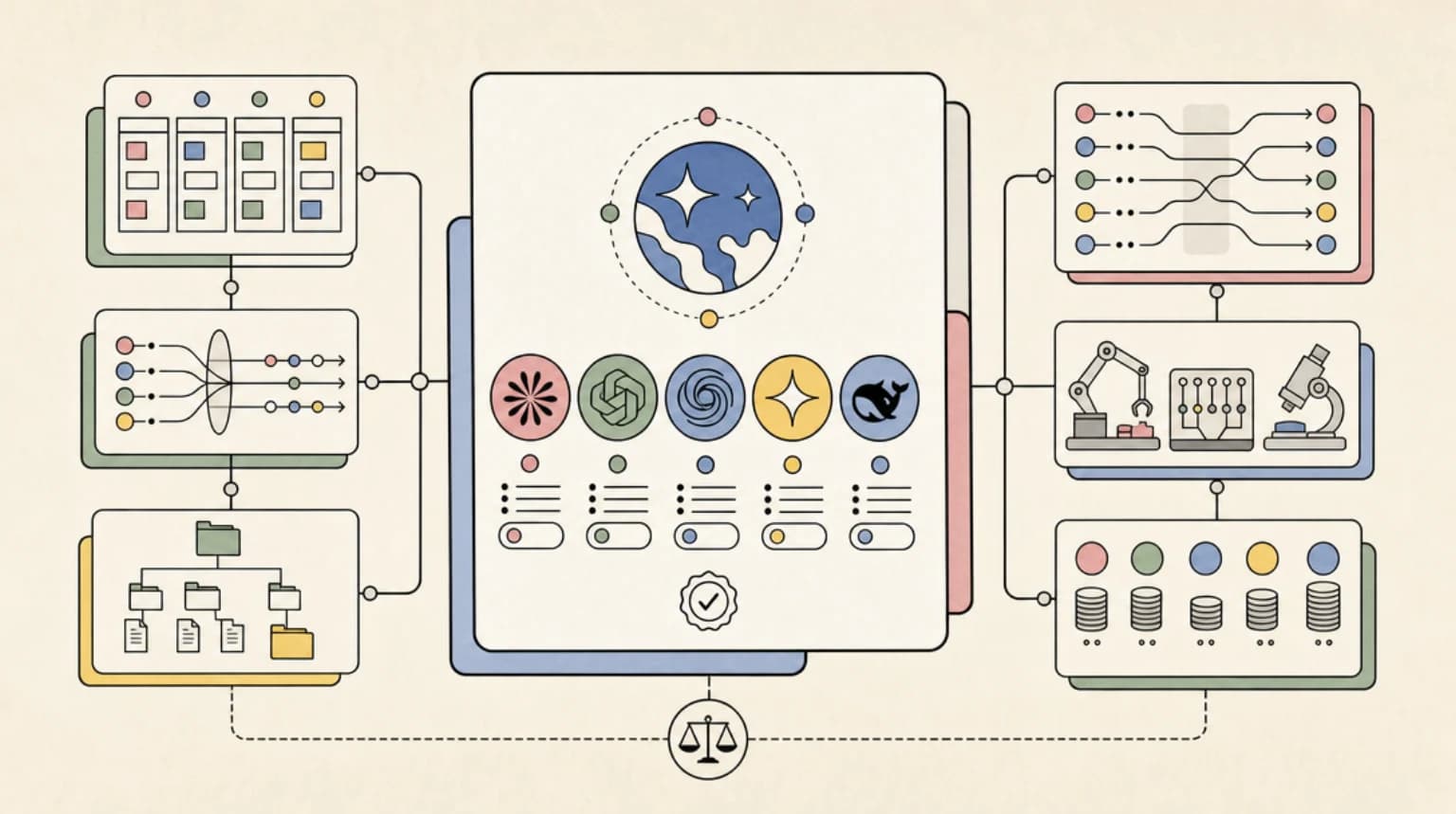
TL;DR
A verified directory of the frontier AI models in July 2026 - Claude Fable 5, Opus 5, GPT-5.6 Sol/Terra/Luna, Sonnet 5, Gemini 3.1 Pro, Kimi K3, and DeepSeek V4 - with pricing checked against official docs.
Last updated: July 27, 2026
The frontier model landscape has been reshaped twice since the June 11 edition of this directory. Anthropic launched Claude Opus 5 on July 24 - near-Fable-5 intelligence at half the price. OpenAI shipped the GPT-5.6 family (Sol, Terra, Luna) to general availability on July 9. Claude Sonnet 5 arrived July 1 with promotional pricing through August. Moonshot AI released Kimi K3 (2.8T parameters) on July 16, and DeepSeek's legacy model names stopped resolving on July 24.
This is a state-of-play directory, not a leaderboard. Every price below was read from the vendor's official pricing page on July 27, 2026. Each entry gets one honest paragraph plus a best-for call, with deeper head-to-head comparisons linked throughout.
What Changed on July 27#
The biggest story is Claude Opus 5. Priced at the same $5/$25 per MTok as Opus 4.8, it scores within 0.5% of Fable 5 on CursorBench 3.2 at max effort, tops the Artificial Analysis Intelligence Index at 61 (ahead of Fable 5's 60 and GPT-5.6 Sol's 59), and achieves 30.2% on ARC-AGI-3 (roughly 3x the next-best model). For most production workloads, the Opus-5-versus-Fable-5 decision has replaced the Opus-4.8-versus-Fable-5 question entirely.
The GPT-5.6 family went GA on July 9 with three tiers: Sol ($5/$30) competes with Opus 5 and Opus 4.8 on peak capability, Terra ($2.50/$15) fills the middle of the workhorse tier, and Luna ($1/$6) is the cheapest closed frontier model outside of prompt-cache rates. The GPT-5.5 series that led the June directory is now legacy.
Claude Sonnet 5 launched July 1 at $2/$10 per MTok through August 31 - a 33% discount versus Sonnet 4.6's $3/$15 pricing. At $2 input, it is cheaper than GPT-5.6 Luna on the input side and competitive on output.
Kimi K3 (2.8T total, 49B active MoE) hit Hugging Face on July 27 with an MIT license, $3/$15 API pricing from Moonshot, and benchmarks that place it between Sonnet 5 and GPT-5.6 Terra on agentic coding. Source weights are downloadable today.
How This Directory Is Ordered#
Models are grouped by tier - maximum capability, frontier workhorse, and budget frontier - rather than ranked on a single number, because benchmark figures come from different reporters using different harnesses, and a unified ranking would be false precision.
One pricing caveat up front: Anthropic's models from Opus 4.7 onward (including Fable 5 and Opus 5) use a new tokenizer that can produce up to 35% more tokens for the same text, per Anthropic's pricing docs, so sticker prices understate the real cost jump versus older models.
Maximum Capability Tier#
1. Claude Fable 5 (Anthropic)#
Fable 5 went GA on June 9, 2026 across the Claude API, Bedrock, Vertex AI, and Microsoft Foundry, per Anthropic's models overview. It is the first public model from the restricted Mythos line: 1M-token context, 128K max output, January 2026 knowledge cutoff, always-on adaptive thinking, and safety classifiers that can refuse cybersecurity and biology requests, with an optional automatic fallback to Opus 4.8. At $10 input / $50 output per MTok, it costs double Opus 5. Plan access ended June 22; it is now API-only, per the pricing page. Simon Willison's release-day verdict still captures the tradeoff: he calls it "a beast" that is "slow, expensive" but exceptionally capable. The honest read: this is now a specialist async heavy-lift tool, not a default. Our Fable 5 vs Opus 4.8 decision guide covers when the premium pays off, and the Opus 5 comparison shows how Opus 5 has narrowed the gap.
Best for: long-horizon agentic coding, multi-file migrations, underspecified projects, and research-grade analysis where a failed run costs more than the tokens.
2. Claude Opus 5 (Anthropic) - New#
Opus 5 launched July 24, 2026 at the same $5 / $25 per MTok as Opus 4.8, per Anthropic's announcement. It tops the Artificial Analysis Intelligence Index at 61, ahead of Fable 5 (60) and GPT-5.6 Sol (59). On CursorBench 3.2 at max effort it performs within 0.5% of Fable 5's peak at half the cost per task. On ARC-AGI-3 it scores 30.2% - roughly three times the next-best model. Mid-conversation tool changes let you swap tools mid-chat without invalidating the prompt cache, and automatic fallbacks to Opus 4.8 handle safety-classifier refusals gracefully. Per Anthropic's system card, the model is Anthropic's most aligned to date with the lowest deceptive-behavior scores. Opus 5 is the new default on Claude Max and the strongest model on Claude Pro. The honest read: for the majority of production agent work, Opus 5 has replaced both Opus 4.8 and Fable 5 as the default choice. Our full Opus 5 vs Opus 4.8 vs Fable 5 comparison has the detailed numbers.
Best for: the new default daily-driver model - production agent loops, interactive coding, code review, and any task where Opus 4.8 was previously the right answer.
3. GPT-5.6 Sol (OpenAI)#
GPT-5.6 Sol is the top of OpenAI's current pricing page at $5 input / $30 output per MTok, with cached input at $0.50 and a 50% batch discount. It went GA on July 9 after preview, per OpenAI's announcement. Sol replaces GPT-5.5 as OpenAI's flagship coding model. On SWE-bench Pro and Terminal-Bench 2.0 it scores near the top of the closed-model field. The honest read: Sol and Opus 5 are direct competitors at identical input pricing ($5/MTok), with Sol holding an edge on OpenAI-toolchain integration and Opus 5 leading on benchmarks like AA Index and ARC-AGI-3. See our GPT-5.6 Sol developer guide and the GPT-5.6 vs Claude 5 model tiers breakdown.
Best for: teams on OpenAI tooling that want flagship agentic capability, and terminal-heavy agent harnesses.
4. Claude Mythos 5 (restricted)#
Listed for completeness, not for selection. Mythos 5 shares Fable 5's $10 / $50 pricing, 1M context, and 128K output, and is available only to approved Project Glasswing customers, per Anthropic's models overview. It ships without Fable 5's stricter safety classifiers. Unless you are a cyberdefense or critical-infrastructure organization with an Anthropic account team, this is not a model you can buy. Our explainer on what Claude Mythos 5 is and who it is for covers the access program.
Best for: approved Glasswing organizations only. Everyone else uses Fable 5 or Opus 5.
Frontier Workhorse Tier#
5. Claude Opus 4.8 (Anthropic)#
At $5 / $25 per MTok with a 1M context window, 128K output, and a January 2026 knowledge cutoff, Opus 4.8 is still available and serves as the safety-classifier fallback for Opus 5 and Fable 5, per Anthropic's models overview. With Opus 5 at the same price and significantly better benchmarks, Opus 4.8's role has shifted from default workhorse to fallback tier. The honest read: new projects should start with Opus 5. Existing Opus 4.8 workloads that do not need Opus 5's extra capability remain perfectly viable, but there is no cost reason to prefer 4.8 over 5.
Best for: existing integrations that depend on Opus 4.8-specific behavior, safety-classifier fallback paths, and teams that want to validate Opus 5 before committing.
6. GPT-5.6 Terra (OpenAI)#
Terra sits at $2.50 / $15 per MTok in OpenAI's pricing, with cached input at $0.25. It is the middle tier of the GPT-5.6 family - not as capable as Sol but significantly cheaper, competing directly with Claude Sonnet 5 and Gemini 3.1 Pro. The honest read: Terra is the value sweet spot in OpenAI's lineup for production agent work that does not need Sol's peak capability. See the GPT-5.6 Sol developer guide for the full Terra/Sol/Luna breakdown.
Best for: production agent loops on OpenAI infrastructure where Sonnet 5 pricing is attractive but GPT-5.6 toolchain integration matters.
7. Claude Sonnet 5 (Anthropic)#
Sonnet 5 launched July 1, 2026 at promotional pricing of $2 / $10 per MTok through August 31, 2026, per Anthropic's pricing page. It is the default model across Claude Code, Claude.ai, and the API, replacing Sonnet 4.6 as Anthropic's recommended starting point for most tasks. The honest read: at $2 input, Sonnet 5 is the most cost-effective closed model for bulk agentic work in the Anthropic lineup, undercutting even GPT-5.6 Luna on input pricing. Post-promo pricing has not been announced. Our Sonnet 5 developer guide has the full migration checklist.
Best for: the default production coding model on Anthropic infrastructure - interactive coding, code review, high-throughput agent loops, and any task that does not need Opus or Fable reasoning depth.
8. GPT-5.6 Luna (OpenAI)#
Luna is the entry tier of the GPT-5.6 family at $1 / $6 per MTok, per OpenAI's pricing page. It is the cheapest closed frontier model outside of prompt-cache or batch rates, and the natural competitor to Haiku 4.5 and GPT-5.4-mini. The honest read: Luna makes the "budget closed frontier" tier redundant for teams already on OpenAI - it is cheaper than most open-weight API options while staying in the OpenAI toolchain.
Best for: high-volume classification, cheap bulk agent work, and workloads where every millicent of token cost matters and Luna's quality ceiling is acceptable.
9. GPT-5.4 family (OpenAI)#
Released March 5, 2026, GPT-5.4 absorbed GPT-5.3-Codex's coding stack into the mainline model, per nxcode's GPT-5.4 guide, which reports 57.7% on SWE-bench Pro and 75% on OSWorld. OpenAI's pricing page lists the family at $2.50 / $15 (standard), $0.75 / $4.50 (mini), and $0.20 / $1.25 (nano). The GPT-5.6 family now offers newer alternatives at most price points (Terra = $2.50/$15 matching GPT-5.4 standard, Luna = $1/$6 undercutting GPT-5.4-mini), so GPT-5.4's role is narrowing to cost-optimized tiers where mini and nano still offer the cheapest OpenAI options. The honest read: GPT-5.4 family remains useful for its mini and nano tiers, which have no direct GPT-5.6 equivalent below Luna's $1/$6. See our GPT-5.4 vs Gemini 3.1 Pro vs DeepSeek V4 three-way.
Best for: cost-conscious production workloads using mini/nano tiers, computer-use agents, and tiered routing where the GPT-5.4 family fills budget slots.
10. Gemini 3.1 Pro (Google)#
Google released Gemini 3.1 Pro in preview on February 19, 2026, headlined by a verified 77.1% on ARC-AGI-2. It is still labeled preview on the Gemini API pricing page as of July 27, at $2 / $12 per MTok up to 200K tokens and $4 / $18 beyond, deployed across AI Studio, Gemini CLI, Vertex AI, and the Gemini app. The honest read: Gemini 3.1 Pro's abstract-reasoning numbers are still competitive, and the preview price is attractive, but the five-month preview label and lack of a GA date make it harder to commit to for regulated production use. Google has not shipped Gemini 3.5 Pro. Our Claude Fable 5 vs Gemini 3.1 Pro comparison has the head-to-head.
Best for: reasoning-heavy workloads under 200K context, teams inside the Google Cloud ecosystem, and multimodal pipelines.
Budget Frontier Tier#
11. Kimi K3 (Moonshot AI) - New#
Kimi K3 is a 2.8T total / 49B active MoE model with an MIT license, released by Moonshot AI on July 16, 2026. Weights are downloadable from Hugging Face as of July 27, per the official launch post. Official API pricing is $3 / $15 per MTok. Independent benchmarks place it between Sonnet 5 and GPT-5.6 Terra on agentic coding tasks. The honest read: Kimi K3 is the strongest open-weight coding model available at launch, with an MIT license that permits commercial use and fine-tuning. API pricing at $3/$15 is close to Sonnet 5's promo rate, but the open weights enable self-hosting economics that closed models cannot match. Our Kimi K3 developer guide covers setup, and the Kimi K3 vs K2.7 comparison shows the generational leap.
Best for: teams that want frontier-adjacent open-weight capability with commercial licensing, self-hosting, or fine-tuning.
12. DeepSeek V4 (open weights)#
DeepSeek released the V4 preview on April 24, 2026: V4-Pro at 1.6T total / 49B active parameters and V4-Flash at 284B / 13B, both MoE models with sparse attention, a 1M-token context window, and weights downloadable from Hugging Face, per the official announcement. Official API pricing remains the story: V4-Pro at $0.435 input / $0.87 output and V4-Flash at $0.14 / $0.28. The legacy deepseek-chat and deepseek-reasoner names retired on July 24, 2026 - our DeepSeek V4 migration guide covers the switch for any API calls that started failing. The honest read: V4 remains the cheapest frontier-adjacent option at scale, but Kimi K3 offers stronger open-weight capability at higher API pricing. For self-hosted high-volume workloads, V4-Flash at $0.14/$0.28 still wins on raw cost per token.
Best for: high-volume agent loops, cost-sensitive products, self-hosting and fine-tuning, and any workload where extreme cost efficiency matters more than peak quality.
13. Claude Haiku 4.5 (Anthropic)#
At $1 / $5 per MTok with a 200K context window, Haiku 4.5 is Anthropic's cheapest model, per Anthropic's pricing page. GPT-5.6 Luna ($1/$6) competes at a similar price point. The honest read: Haiku 4.5 remains the right choice for Anthropic-toolchain workloads that need the cheapest possible Claude inference. For teams not locked into Anthropic, Luna offers a slightly higher output cost but full GPT-5.6 family compatibility.
Best for: cheap classification, high-throughput bulk work, and Anthropic-toolchain workloads where every cent of token spend is under scrutiny.
Verified Pricing Table#
All prices in USD per million tokens, read from official vendor pricing pages on July 27, 2026.
| Model | Input | Output | Cache read | Context |
|---|---|---|---|---|
| Claude Fable 5 | $10.00 | $50.00 | $1.00 | 1M |
| Claude Mythos 5 (restricted) | $10.00 | $50.00 | $1.00 | 1M |
| Claude Opus 5 | $5.00 | $25.00 | $0.50 | 1M |
| GPT-5.6 Sol | $5.00 | $30.00 | $0.50 | - |
| Claude Opus 4.8 | $5.00 | $25.00 | $0.50 | 1M |
| GPT-5.5 | $5.00 | $30.00 | $0.50 | - |
| GPT-5.5-pro / GPT-5.4-pro | $30.00 | $180.00 | n/a | - |
| Kimi K3 | $3.00 | $15.00 | - | 1M |
| GPT-5.6 Terra | $2.50 | $15.00 | $0.25 | - |
| Claude Sonnet 5 (promo through Aug 31) | $2.00 | $10.00 | $0.20 | 1M |
| Gemini 3.1 Pro Preview (<=200K) | $2.00 | $12.00 | $0.20/MTok + storage | 200K tier |
| Gemini 3.1 Pro Preview (>200K) | $4.00 | $18.00 | - | above 200K |
| GPT-5.4 | $2.50 | $15.00 | $0.25 | 272K (1M via API) |
| GPT-5.6 Luna | $1.00 | $6.00 | $0.10 | - |
| Claude Haiku 4.5 | $1.00 | $5.00 | $0.10 | 200K |
| Claude Sonnet 4.6 | $3.00 | $15.00 | $0.30 | 1M |
| GPT-5.4-mini | $0.75 | $4.50 | $0.075 | - |
| DeepSeek-V4-Pro | $0.435 | $0.87 | $0.003625 | 1M |
| GPT-5.4-nano | $0.20 | $1.25 | $0.02 | - |
| DeepSeek-V4-Flash | $0.14 | $0.28 | $0.0028 | 1M |
Anthropic, OpenAI, and Google each offer a 50% batch discount; DeepSeek and Moonshot do not list one. Full cost modeling is in our frontier model API pricing breakdown.
How to Actually Choose#
Three questions settle most routing decisions. Is the task long-horizon and autonomous with budget for peak capability? Use Opus 5 (or Fable 5 for the hardest problems). Is the workload high-volume on a moderate budget? Start with Sonnet 5 or GPT-5.6 Terra. Does cost per token dominate all other concerns? DeepSeek V4-Flash or self-hosted Kimi K3. For teams already on OpenAI tooling, the GPT-5.6 family (Sol/Terra/Luna) provides a unified stack across all three tiers. For teams on Anthropic, Opus 5 - Sonnet 5 - Haiku 4.5 covers the same ground.
FAQ#
What is the most capable AI model in July 2026?#
Claude Fable 5 still holds the ceiling on the hardest agentic coding and reasoning tasks, but Claude Opus 5 is within 0.5% of Fable 5 on CursorBench at half the price and tops the Artificial Analysis Intelligence Index at 61. For most practical purposes, Opus 5 is the best daily-driver model. GPT-5.6 Sol competes closely on coding benchmarks. See our Opus 5 vs Fable 5 comparison.
Is Opus 5 better than Opus 4.8?#
Significantly better on every published benchmark, at the same price. There is no cost reason to choose Opus 4.8 over Opus 5 for new projects. Opus 4.8 remains available as a safety-classifier fallback for Opus 5 and Fable 5. Our Opus 5 vs Opus 4.8 vs Fable 5 comparison has the detailed benchmarks.
What happened to GPT-5.5?#
GPT-5.5 is now a legacy model. The GPT-5.6 family (Sol, Terra, Luna) replaced it on July 9, 2026. Sol ($5/$30) matches GPT-5.5's input pricing with improved benchmark performance, Terra ($2.50/$15) covers the mid-range, and Luna ($1/$6) opens a new budget tier below GPT-5.4 pricing.
Is Kimi K3 really open weights?#
Yes. The 2.8T MoE model is MIT-licensed and weights are downloadable from Hugging Face as of July 27, 2026. API pricing from Moonshot is $3/$15 per MTok. Self-hosting costs depend on your hardware, but the MIT license permits commercial use and fine-tuning without restrictions.
Why is Gemini 3.1 Pro still in preview?#
Google has not shipped GA as of July 27, 2026. It launched in preview on February 19, 2026 - over five months without a GA date. Teams with strict production-SLA requirements should factor that in.
Should I pay 2x for Fable 5 over Opus 5?#
Only for the hardest long-horizon agentic tasks where Opus 5's benchmark gaps (within 0.5% on CursorBench, roughly 3x on ARC-AGI-3) are the difference between success and failure. For interactive coding, code review, and most production agent work, Opus 5 at $5/$25 closes the gap to the point where Fable 5's $10/$50 premium is hard to justify. See our cost-per-task analysis.
What is Claude Mythos 5 and can I use it?#
Mythos 5 is Fable 5 without safety classifiers, restricted to approved Glasswing organizations at $10/$50 pricing. There is no self-serve access.
Is Sonnet 5 promotional pricing permanent?#
No. The $2/$10 pricing runs through August 31, 2026. Post-promo pricing has not been announced. If you are building a long-term cost model that depends on Sonnet 5 pricing, budget for a potential increase after August 31.
From the archive
The Mid-Tier Shootout: GPT-5.4 vs Gemini 3.1 Pro vs DeepSeek V4 Pro
Jun 11, 2026 • 11 min read
GPT-5.6 Sol vs Claude Opus 5: The $5 Workhorse Head-to-Head
Jun 11, 2026 • 11 min read
How to Use Claude Fable 5: Every Access Path Explained
Jun 11, 2026 • 8 min read
Is Claude Fable 5 Slow? Latency in Practice, and When It Matters
Jun 11, 2026 • 8 min read
Official Sources#
All links verified July 27, 2026.
| Source | Link | What it covers |
|---|---|---|
| Anthropic: Claude API pricing | https://platform.claude.com/docs/en/about-claude/pricing | All Claude model pricing, caching, batch, tokenizer note |
| Anthropic: Models overview | https://platform.claude.com/docs/en/about-claude/models/overview.md | Fable 5, Opus 5, Mythos 5, Sonnet 5 GA dates and specs |
| Anthropic: Claude Opus 5 announcement | https://www.anthropic.com/news/claude-opus-5 | Opus 5 benchmarks, pricing, availability |
| Anthropic: Opus 5 System Card | https://www.anthropic.com/claude-opus-5-system-card | Safety evaluation, alignment, capability benchmarks |
| OpenAI: API pricing | https://developers.openai.com/api/docs/pricing | GPT-5.6 Sol/Terra/Luna, GPT-5.4 family pricing |
| OpenAI: GPT-5.6 announcement | https://openai.com/index/gpt-5-6/ | GA announcement, model family overview |
| Google: Gemini API pricing | https://ai.google.dev/gemini-api/docs/pricing | Gemini 3.1 Pro Preview pricing |
| DeepSeek: API pricing | https://api-docs.deepseek.com/quick_start/pricing | V4-Pro and V4-Flash pricing |
| Moonshot: Kimi K3 pricing | https://platform.moonshot.cn/docs/pricing/chat | Kimi K3 API pricing |
| Kimi K3 launch post | https://kimi.moonshot.cn/kimi-k3 | Model specs, open weights, benchmarks |
| Artificial Analysis | https://artificialanalysis.ai/models | Independent benchmark aggregation and leaderboard |
Continue Reading#
- Claude Opus 5 vs Opus 4.8 vs Fable 5 Comparison - Full benchmark breakdown and decision guide
- Frontier Model API Pricing July 2026 - Updated pricing comparison with Opus 5, GPT-5.6, and Sonnet 5
- GPT-5.6 Sol Developer Guide - Full guide to OpenAI's new flagship model family
- Claude Sonnet 5 Developer Guide - Migration checklist and pricing analysis
- Kimi K3 Developer Guide - Setup, API integration, and self-hosting guide
- GPT-5.6 vs Claude 5 Coding Model Tiers - Head-to-head tier comparison
- Fable 5 vs Opus 4.8 Decision Guide - When the premium pays off
Read next
Budget AI Coding Models Compared August 2026: V4 Flash vs Luna vs Gemini 3.5 Flash vs Haiku 4.5
The sub-$1.50 coding tier just got serious: DeepSeek V4 Flash 0731 posts frontier-adjacent agent scores at $0.14/$0.28 (peak/off-peak pricing from Aug 16), GPT-5.6 Luna dropped 80% to $0.20/$1.20, and Gemini 3.5 Flash and Claude Haiku 4.5 hold the hosted middle. Prices verified July 31 and August 15, 2026.
10 min readCodex vs Claude Code in July 2026: Opus 5, GPT-5.6, and the Post-Fable-5 Landscape
Anthropic launched Opus 5 at $5/$25 and Fable 5 went API-only on July 9. OpenAI shipped GPT-5.6 Sol/Terra/Luna inside Codex and hit 8 million users. Here is the honest July 2026 update on which tool fits which developer.
11 min readFrontier Model API Pricing, August 2026: Claude vs OpenAI vs Gemini vs DeepSeek
Same-day-verified llm api pricing august 2026: Claude Fable 5, GPT-5.6 Sol/Terra/Luna, Claude Sonnet 5, Gemini 3.5 Flash, and DeepSeek V4 compared per million tokens, plus the caveats that change the math.
11 min readShare
Developers Digest
Technical content at the intersection of AI and development. Building with AI agents, Claude Code, and modern dev tools - then showing you exactly how it works.
300+ videos30K+ GitHub stars850+ articles
Related Tools
AI ModelsOpen weights

DeepSeek V4
DeepSeek's open-weights frontier family, previewed April 24, 2026. V4-Pro is 1.6T total / 49B active params; V4-Flash is...
View ToolAI Models

Gemini
Google's frontier model family. Gemini 2.5 Pro has 1M token context and top-tier coding benchmarks. Gemini 3 Pro pushes...
View ToolAI Models

Claude Haiku 4.5
Anthropic's smallest Claude 4.5 model. Near-frontier coding performance at one-third the cost of Sonnet 4 and up to 4-5x...
View ToolAI ModelsNew
Claude Fable 5
Anthropic's first generally available Mythos-class model, released June 9, 2026. 1M context, 128K max output, $10/$50 pe...
View ToolApps from Developers Digest
Developer ToolsIn Progress
Migrate
Beat the August 2026 Assistants API sunset. Paste old code, get Responses API.
View AppDirectories
AI Models
Pick a model in 30 seconds. Built for the answer, not the marketing.
View AppDirectories
Demos
Try AI models in the browser before paying for a single token.
View AppRelated Guides
Guide
Run AI Models Locally with Ollama and LM Studio
Install Ollama and LM Studio, pull your first model, and run AI locally for coding, chat, and automation - with zero cloud dependency.
Getting StartedGuide
AI Agent Frameworks Compared: LangGraph vs CrewAI vs Mastra vs CopilotKit
Deep comparison of the top AI agent frameworks - LangGraph, CrewAI, Mastra, CopilotKit, AutoGen, and Claude Code.
AI AgentsGuide
Model Aliases - Claude Code
Use opus, sonnet, haiku, and best to switch models easily.
Claude CodeRelated Videos
Grok-2: xAI's New Frontier Model
In this video, I introduce the beta release of Grok 2 and Grok 2 Mini. I discuss the new models available on the X platform and their impressive performance, including their ranking on the...
Video·
LLAMA 3: Set to Rival Top AI Models
Introducing Meta Llama 3: The most capable openly available LLM to date Meta has released two groundbreaking AI models under the Lama 3 series, an 8 billion parameter model and a 70 billion...
Video·

Together.AI: The Cloud Platform For Building and Running Generative AI Models
In this video, I explore Together AI which is an AI cloud platform that also you to both easily access apis for a ton of open source models such as the llama-2 models, mistral 7b, stable diffusion...
Video·
Related Posts

10 min read
AI Models
Budget AI Coding Models Compared August 2026: V4 Flash vs Luna vs Gemini 3.5 Flash vs Haiku 4.5
The sub-$1.50 coding tier just got serious: DeepSeek V4 Flash 0731 posts frontier-adjacent agent scores at $0.14/$0.28 (...
8 min read
Anthropic
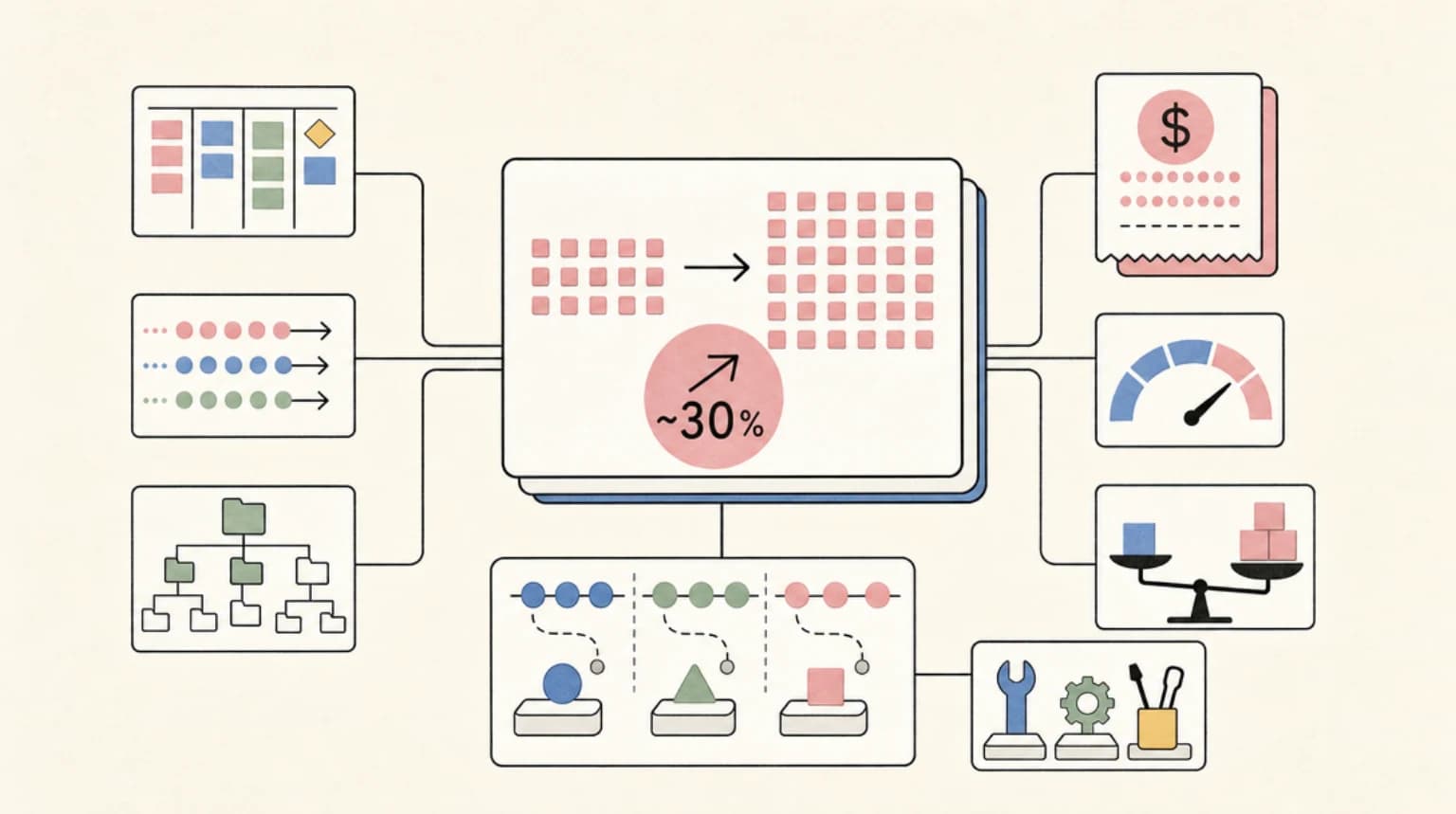
The Claude Tokenizer Change: What ~30% More Tokens Means for Your Bill
Anthropic's docs say the tokenizer introduced with Opus 4.7 can use up to 35% more tokens for the same text. Here is wha...
10 min read
OpenAI
Migrating Off Retired GPT Models in 2026: A Working Checklist
Migrating off retired GPT models in 2026: the live retirement table, what maps to what, an eval-before-switch day plan,...
7 min read
AI Models
Fable 5 vs Opus 4.8: A Data-Driven Decision Guide for Engineering Teams
Fable 5 posts an 80.3% SWE-Bench Pro score and costs 2x Opus 4.8 - here is the task-profile scoring guide that tells you...
7 min read
AI Models
Models.dev Makes Model Routing Feel Like Infrastructure
The models.dev project is trending because AI teams need one boring source of truth for model specs, pricing, context wi...

8 min read
Comparison
Don't Paste the AI vs Vomit vs NoBuzz: AI Slop Tools Compared
dontpastetheai.com, Vomit, and NoBuzz hit Hacker News in the same week. A social contract, a local rewrite, and a second...
Build with the member tools
Get Smarter About AI Dev
New tutorials, open-source projects, and deep dives on coding agents - delivered weekly.
One email per weekReal code, not theoryFree forever