Migrating Off Retired GPT Models in 2026: A Working Checklist
TL;DR
Migrating off retired GPT models in 2026: the live retirement table, what maps to what, an eval-before-switch day plan, and when to jump providers.
Last updated: August 31, 2026
What Changed on August 31, 2026#
- Two pricing rows moved since July. GPT-5.6-Sol is now $4 input / $20 output per MTok (cut August 27), undercutting Claude Opus 5 on output. Claude Sonnet 5's $2/$10 rate became permanent on August 15 - the September 1 increase to $3/$15 will not occur. DeepSeek's peak/off-peak policy is in effect since August 16: the off-peak rates in the table below are $0.22/$0.66 for V4 Flash and $0.66/$1.98 for V4 Pro, doubling during peak hours (01:00-04:00 and 06:00-10:00 UTC).
What Changed on July 31, 2026#
- The July 23 shutdown wave has passed. The GPT-5 and 5.1 chat aliases, all Codex variants (including gpt-5.2-codex), and both deep-research models stopped resolving on schedule. If any of those strings are still in your code, requests are already failing.
- The replacement model family is now GPT-5.6. Every recommended replacement on the live page points at
gpt-5.6-sol(frontier),gpt-5.6-terra(mid-tier), orgpt-5.6-luna(cheap/fast) - the GPT-5.5 mapping from the original version of this guide is now the previous generation. - New waves appeared since June. The original GPT-5 snapshots (gpt-5-2025-08-07 and siblings) and the o3 series now have a shutdown date of December 11, 2026, replacing the earlier "base models have no deadline" guidance.
- July 24 retired DeepSeek's legacy names. The cross-provider caveat from the June version is now a live event:
deepseek-chatanddeepseek-reasonerno longer resolve.
First, Read the Clock Correctly#
OpenAI's deprecations page defines its terms precisely. "Deprecated" takes effect the moment it is announced - the model still works, but the countdown has started. "Shut down" means requests stop resolving. Stated notice: at least 6 months for GA models, 3 months for specialized variants, as little as 2 weeks for previews.
Two things people get wrong:
The base GPT-5.1 through 5.4 models are still not deprecated. As of July 31, 2026, the only base-model rows on the deprecations page are the original GPT-5 snapshots (gpt-5-2025-08-07, gpt-5-mini-2025-08-07, gpt-5-nano-2025-08-07, gpt-5-pro-2025-10-06), which shut down December 11, 2026 in favor of the GPT-5.6 family. If you pinned gpt-5.1 or newer, you still have no deadline.
The dates cluster into four waves. August 10, 2026 takes the 5.2 and 5.3 chat aliases. October 23 is the big one: GPT-4, GPT-4o, GPT-3.5 Turbo, o1, o1-pro, o3-mini, and o4-mini. December 11 takes the original GPT-5 snapshots and the o3 series. And the legacy audio, realtime, and transcription families shut down January 20, 2027.
What Maps to What#
Every row comes from the official deprecations page, accessed July 31, 2026:
| Retiring model | Deprecated | Shuts down | OpenAI's replacement |
|---|---|---|---|
| gpt-5-chat-latest, gpt-5.1-chat-latest | Apr 22, 2026 | Jul 23, 2026 (done) | gpt-5.6-sol |
| gpt-5-codex, gpt-5.1-codex, gpt-5.1-codex-max, gpt-5.2-codex | Apr 22, 2026 | Jul 23, 2026 (done) | gpt-5.6-sol |
| gpt-5.1-codex-mini | Apr 22, 2026 | Jul 23, 2026 (done) | gpt-5.6-terra |
| o3-deep-research, o4-mini-deep-research | Apr 22, 2026 | Jul 23, 2026 (done) | gpt-5.6-sol |
| gpt-5.2-chat-latest, gpt-5.3-chat-latest | May 8, 2026 | Aug 10, 2026 | gpt-5.6-sol |
| gpt-5-2025-08-07, gpt-5-mini-2025-08-07, gpt-5-nano-2025-08-07 | Jun 11, 2026 | Dec 11, 2026 | gpt-5.6-sol / terra / luna |
| gpt-5-pro-2025-10-06, o3, o3-pro | Jun 11, 2026 | Dec 11, 2026 | gpt-5.6-sol |
| gpt-4o-2024-05-13 | Apr 22, 2026 | Oct 23, 2026 | gpt-5.6-sol |
| gpt-4-0613 (and aliases) | Apr 22, 2026 | Oct 23, 2026 | gpt-5.6-sol |
| o1, o3-mini | Apr 22, 2026 | Oct 23, 2026 | gpt-5.6-sol |
| o1-pro | Apr 22, 2026 | Oct 23, 2026 | gpt-5.6-sol |
| o4-mini | Apr 22, 2026 | Oct 23, 2026 | gpt-5.6-terra |
| gpt-3.5-turbo-0125 | Apr 22, 2026 | Oct 23, 2026 | gpt-5.6-terra |
| gpt-realtime, gpt-audio, gpt-4o-audio, gpt-4o-realtime families | Jul 20, 2026 | Jan 20, 2027 | gpt-realtime-2.1 / gpt-audio-1.5 |
The pattern: everything funnels into the GPT-5.6 family - gpt-5.6-sol for frontier work, gpt-5.6-terra for mid-tier, gpt-5.6-luna for cheap and fast. The mapping is a starting point, not a verdict - o4-mini to gpt-5.6-terra is like-for-like, but gpt-4-0613 to gpt-5.6-sol jumps roughly three model generations and your prompts will behave differently.
Some retirements already happened before this wave: codex-mini-latest on February 12, 2026, chatgpt-4o-latest on February 17, the GPT-4o audio and realtime previews on May 7, DALL-E 2 and 3 on May 12. Check older code paths for these first.
The API Diffs That Bite#
The Assistants API has about four weeks left#
The biggest non-model deadline: the Assistants API, deprecated August 26, 2025, shuts down August 26, 2026, replaced by the Responses and Conversations APIs. Model swaps are one-line changes; this is an architecture change - threads, runs, and tool orchestration all move. Our Responses API migration walkthrough covers the mapping. Do it before the model swap so the eval suite only runs once. This is the tightest deadline in this guide.
Aliases retire, snapshots persist#
The lesson of this wave: -chat-latest aliases retire on their own schedule regardless of the underlying model's status. Pin dated snapshots in production and keep aliases in dev only. Your inventory grep should look for both forms.
Reasoning models fold into one family#
o1, o1-pro, o3-mini, o4-mini, and both deep-research models all disappear by October 23, and the original o3 snapshots follow on December 11. The o-series had distinct latency and deliberation behavior that teams tuned prompts around. When those prompts move to GPT-5.6, treat them as unverified - recommended replacement does not mean behavioral equivalent.
The platform tooling is churning too#
On June 3, 2026, OpenAI deprecated its hosted Evals platform, Agent Builder, and the Reusable Prompts API, all shutting down November 30, 2026 (evals go read-only October 31). If your plan was to run comparisons in OpenAI's hosted evals UI, that tool is itself on a deprecation clock. Keep the eval harness in your own repo, pointed at whatever provider you like.
Eval Before You Switch: A Five-Day Plan#
A model swap without evals is a production incident with extra steps. The plan fits in one week:
Day 1 - Inventory. Grep for every model string: gpt-4, gpt-4o, gpt-3.5, o1, o3, o4, codex, -chat-latest. Check the usage dashboard for models called from code you forgot - old Lambdas and cron jobs are where retired models hide. Tag each call site with its shutdown date.
Day 2 - Build the golden set. Pull 50 to 200 real production requests per call site, with outputs you considered good. Skew toward edge cases and past failures. Capture latency and token counts as your baseline.
Day 3 - Run side by side. Replay the golden set against the recommended replacement and at least one alternative (leaving o4-mini, test both gpt-5.6-terra and gpt-5.6-luna). Score with whatever fits: exact match for structured output, a judge model for prose, your test suite for code.
Day 4 - Re-run the cost math. Token counts change across model generations, and cached-input pricing changes the equation for repeated system prompts. Compute real cost per request from the Day 3 runs, not sticker prices.
Day 5 - Staged cutover. Put the model name in config, not code. Ship behind a flag at 10 percent of traffic, compare error rates and output quality, then ramp. Keep the old model in the fallback path until its shutdown date - that is what the deprecation window is for.
From the archive
Qwen 3.7 Max Developer Guide: 1M Context, $1.25/MTok, and Agent-First Architecture
Jun 11, 2026 • 8 min read
Recursive Self-Improvement: What Fable 5, Dario's Essay, and Anthropic's Own Data Actually Tell Us
Jun 11, 2026 • 10 min
Rewriting Your Prompts and Skills for Fable 5
Jun 11, 2026 • 10 min read
Ultracode: Claude Code Multi-Agent Orchestration Mode Explained
Jun 11, 2026 • 8 min read
The Cost Table#
Replacement-target pricing from the official pricing page, accessed July 31, 2026, per million tokens:
| Model | Input | Cached input | Output |
|---|---|---|---|
| gpt-5.6-sol | $5.00 | $0.50 | $30.00 |
| gpt-5.6-terra | $2.00 | $0.20 | $12.00 |
| gpt-5.6-luna | $0.20 | $0.02 | $1.20 |
| gpt-5.5 | $5.00 | $0.50 | $30.00 |
| gpt-5.5-pro | $30.00 | - | $180.00 |
| gpt-5.4 | $2.50 | $0.25 | $15.00 |
| gpt-5.4-mini | $0.75 | $0.075 | $4.50 |
| gpt-5.4-nano | $0.20 | $0.02 | $1.25 |
Long-context rates apply above the 272K threshold: gpt-5.6-sol rises to $10/$45, gpt-5.6-terra to $4/$18, gpt-5.6-luna to $0.40/$1.80. Batch processing is a flat 50 percent discount across the family. The retired models no longer appear on the pricing page at all - one more reason to capture per-request cost on Day 2 while the old model still runs.
Two routing notes. First, gpt-5.6-terra at $2/$12 is 60 percent cheaper on input than gpt-5.6-sol - if your gpt-4o workload never pushed capability limits, evaluate the cheaper target first, and gpt-5.6-luna at $0.20/$1.20 is the value pick OpenAI has never offered before. Second, cached input at one tenth of the base rate rewards putting static system prompts and tool definitions first in every request. The cross-provider picture is in our frontier model API pricing roundup; the GPT-5.6 family developer guide covers what changes at the API surface.
Azure Runs on a Different Clock#
If you consume these models through Microsoft Foundry (formerly Azure OpenAI), the dates above do not apply to you. Azure publishes its own model lifecycle and retirement policy: GA models get an 18-month lifecycle, new-customer access ends at 12 months, and retired models return 410 Gone.
The sharpest difference is auto-upgrades. Azure force-upgrades Standard deployments at retirement - when gpt-4o versions 2024-05-13 and 2024-08-06 retired on March 31, 2026, those deployments were auto-upgraded to gpt-5.1. A silent three-generation jump is not something you want to learn about from a customer ticket. Set versionUpgradeOption deliberately: NoAutoUpgrade means the deployment stops at retirement, which is at least a loud failure. Provisioned deployments are never auto-upgraded. Fine-tuned models get their own schedule - gpt-4o fine-tune deployments survive on Azure until October 1, 2027.
When to Jump Providers Entirely#
A forced migration is the cheapest moment to re-evaluate the platform decision - you are paying the eval and cutover cost anyway. Testing a third provider on Day 3 costs one more column in the results spreadsheet.
Alternatives at the tiers people are leaving, per official pricing pages accessed August 31, 2026 (input/output per MTok):
| Tier you are leaving | OpenAI target | Anthropic option | Open-weights option |
|---|---|---|---|
| gpt-4o / chat aliases | gpt-5.6-sol ($4/$20) | Claude Opus 5 ($5/$25) | DeepSeek-V4-Pro ($0.66/$1.98 off-peak) |
| o4-mini / gpt-3.5 | gpt-5.6-terra ($2/$12) | Claude Haiku 4.5 ($1/$5) | DeepSeek-V4-Flash ($0.22/$0.66 off-peak) |
| Mid-tier workhorse | gpt-5.6-terra ($2/$12) | Claude Sonnet 5 ($2/$10, permanent since Aug 15) | DeepSeek-V4-Flash ($0.22/$0.66 off-peak) |
Anthropic's pricing is structurally similar to OpenAI's - 0.1x cache reads, 50 percent batch discount - and Claude Opus 5 undercuts gpt-5.6-sol on output at the same input price, which makes the cross-provider bake-off on Day 3 genuinely worth the extra column. DeepSeek's V4 pricing is the aggressive option; its API speaks both OpenAI and Anthropic wire formats, making it cheap to include in a bake-off - see the deepseek-chat to V4 migration guide.
The honest caveat: switching providers does not get you off the deprecation treadmill. DeepSeek retired its legacy deepseek-chat and deepseek-reasoner model names on July 24, 2026 - if you had not migrated, that is now a live incident, not a deadline. Anthropic lists Opus 4.1, Opus 4, and Sonnet 4 as deprecated right now. Every provider runs this cycle; the variables are notice and mapping quality.
When to Stay Put#
Jumping providers is the wrong call more often than the pricing tables suggest. Stay if any of these hold:
- You are on a gpt-5.1 or newer base model. No deadline exists today. Doing nothing is a valid plan.
- Your eval gap is small and your integration surface is large. Structured outputs, tool calling, caching semantics, and SDK behavior all differ across providers. A 2 percent quality difference does not pay for re-testing all of that.
- Your shutdown date is October 23 or later. A measured one-week eval in September beats a rushed cutover in July.
- You depend on provider-specific features - deep Codex integration, the Realtime API, completed compliance reviews. Re-procurement costs are real even when token prices are lower elsewhere.
The October wave is large but the process is the same at any scale: inventory, golden set, side-by-side, cost math, staged cutover. Budget one week per major call site and these deadlines are comfortable, not scary.
FAQ#
Is GPT-5.4 being retired in 2026?#
No. As of July 31, 2026, the deprecations page lists no shutdown for gpt-5.4 or any gpt-5.1 through 5.4 base model. The retirements cover the original GPT-5 snapshots (December 11), -chat-latest aliases, Codex variants, the o-series, and GPT-4-generation models.
What replaces GPT-4o in the OpenAI API?#
OpenAI's recommendation for gpt-4o-2024-05-13 is gpt-5.6-sol, with a shutdown date of October 23, 2026. If the workload was cost-sensitive rather than capability-bound, evaluate gpt-5.6-terra too - run both against a golden set first.
When does the Assistants API shut down?#
August 26, 2026, one year after its deprecation announcement. The replacements are the Responses and Conversations APIs. It is an architectural migration, not a model swap, so schedule it before model changes on the same code paths. This is the nearest deadline on the board.
Do Azure OpenAI retirement dates match OpenAI's dates?#
No. Microsoft Foundry runs an independent 18-month lifecycle - Azure retired gpt-4o versions 2024-05-13 and 2024-08-06 on March 31, 2026, months ahead of OpenAI's October 23 API date, and auto-upgrades Standard deployments at retirement unless versionUpgradeOption says otherwise.
Official Sources#
| Resource | Description | Last Verified |
|---|---|---|
| OpenAI Model Deprecations | Retirement table, replacement mappings, notice policy | July 31, 2026 |
| OpenAI API Pricing | GPT-5.6 family and legacy pricing | July 31, 2026 |
| Microsoft Foundry Models lifecycle and support policy | Azure lifecycle, auto-upgrades, fine-tune schedules | July 31, 2026 |
| Anthropic Claude API Pricing | Claude pricing, caching, batch, deprecated models | July 31, 2026 |
| DeepSeek API Pricing | V4 pricing, legacy name retirement, compatible endpoints | July 31, 2026 |
Continue Reading#
- GPT-5.6 Sol, Terra, and Luna: What Each Model Is For - the replacement family, explained
- DeepSeek Chat to V4 Migration Guide - the legacy-name migration that already shipped
- Frontier Model API Pricing: July 2026 - cross-provider pricing with same-day verification
- Migrating to Claude Fable 5 - the Anthropic path, including what changed when Opus 5 launched
- Moving From OpenAI Evals to Promptfoo - OpenAI's own suggested evals migration path
Read next
The Frontier Model Landscape, July 2026 Edition
A verified directory of the frontier AI models in July 2026 - Claude Fable 5, Opus 5, GPT-5.6 Sol/Terra/Luna, Sonnet 5, Gemini 3.1 Pro, Kimi K3, and DeepSeek V4 - with pricing checked against official docs.
12 min readThe Claude Tokenizer Change: What ~30% More Tokens Means for Your Bill
Anthropic's docs say the tokenizer introduced with Opus 4.7 can use up to 35% more tokens for the same text. Here is what that does to per-request cost, max_tokens, and cross-model comparisons.
8 min readFable 5 vs Opus 4.8: A Data-Driven Decision Guide for Engineering Teams
Fable 5 posts an 80.3% SWE-Bench Pro score and costs 2x Opus 4.8 - here is the task-profile scoring guide that tells you when the premium pays off.
7 min readShare
Developers Digest
Technical content at the intersection of AI and development. Building with AI agents, Claude Code, and modern dev tools - then showing you exactly how it works.
300+ videos30K+ GitHub stars850+ articles
Related Tools
AI Models

ChatGPT
OpenAI's flagship. GPT-4o for general use, o3 for reasoning, Codex for coding. 300M+ weekly users. Tasks, agents, web br...
View ToolAI Models

OpenRouter
Unified API for 200+ models. One API key, one billing dashboard. OpenAI, Anthropic, Google, Meta, Mistral, and more. Aut...
View ToolAI Models

GPT-5
OpenAI's latest flagship model. Major leap in reasoning, coding, and instruction following over GPT-4o. Powers ChatGPT P...
View ToolAI Coding

Droid
Factory AI's terminal coding agent. Runs Anthropic and OpenAI models in one subscription. Handles full tasks end-to-end...
View ToolApps from Developers Digest
Developer ToolsIn Progress
Skill Builder
Turn a one-liner into a working Claude Code skill. From idea to installed in a minute.
View AppDeveloper ToolsIn Progress
Migrate
Beat the August 2026 Assistants API sunset. Paste old code, get Responses API.
View AppDirectories
AI Models
Pick a model in 30 seconds. Built for the answer, not the marketing.
View AppRelated Guides
Guide
Run AI Models Locally with Ollama and LM Studio
Install Ollama and LM Studio, pull your first model, and run AI locally for coding, chat, and automation - with zero cloud dependency.
Getting StartedGuide
Bash Tool - Claude Code
Execute shell commands with persistent working directory in project bounds.
Claude CodeGuide
Migrating from Cursor to Claude Code
A concrete step-by-step guide to moving your development workflow from Cursor to Claude Code - settings, rules, keybindings, and the habits that transfer.
Getting StartedRelated Videos
OpenAI GPT-4o Speech Models in 6 Minutes
OpenAI Enhances Speech Models: New Text-to-Speech & Speech-to-Text Innovations In today's video, we delve into OpenAI's latest release of three new audio models. Discover the enhanced speech-to-te...
Video·
LLAMA 3: Set to Rival Top AI Models
Introducing Meta Llama 3: The most capable openly available LLM to date Meta has released two groundbreaking AI models under the Lama 3 series, an 8 billion parameter model and a 70 billion...
Video·

Together.AI: The Cloud Platform For Building and Running Generative AI Models
In this video, I explore Together AI which is an AI cloud platform that also you to both easily access apis for a ton of open source models such as the llama-2 models, mistral 7b, stable diffusion...
Video·
Related Posts
8 min read
Anthropic
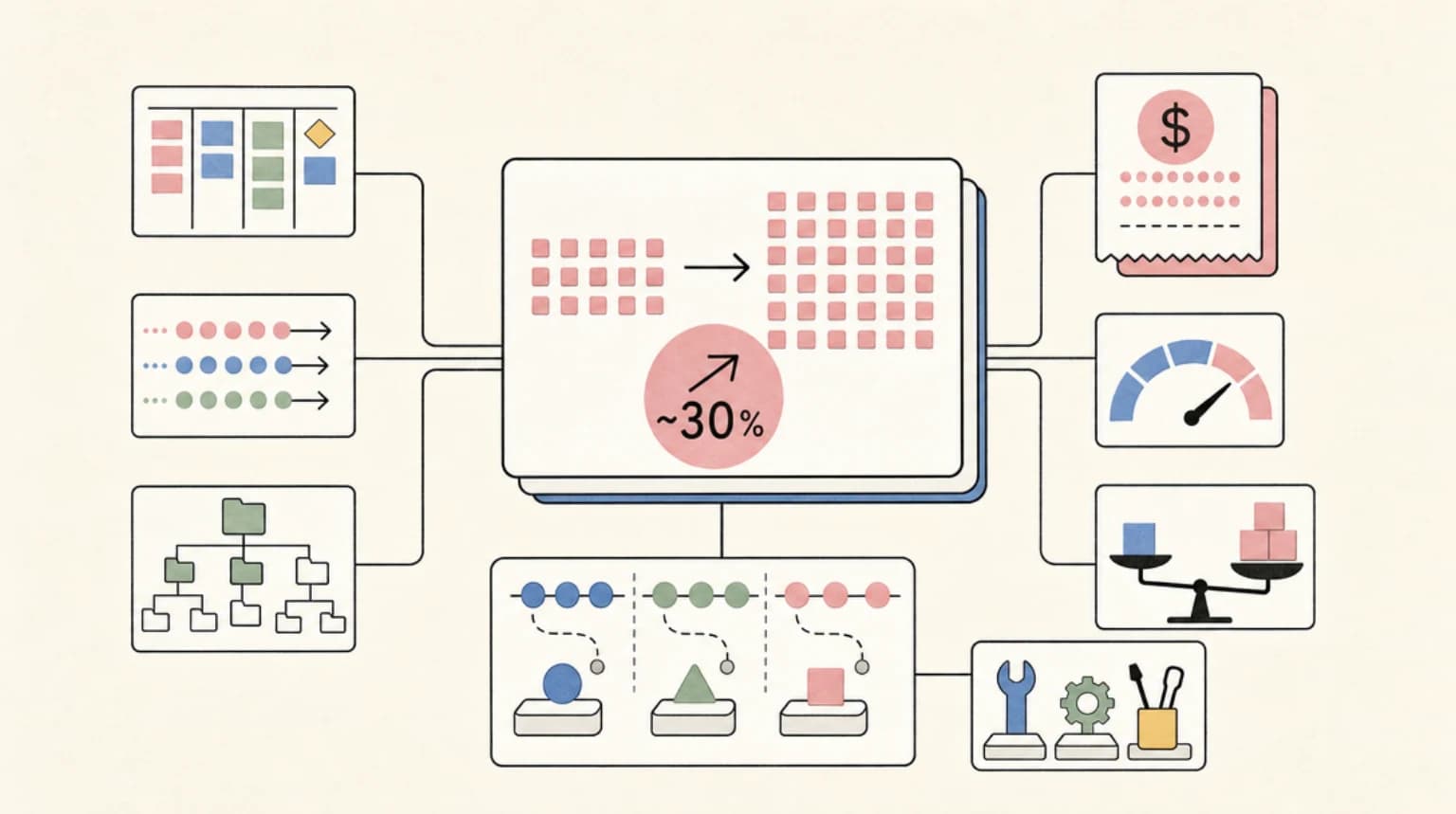
The Claude Tokenizer Change: What ~30% More Tokens Means for Your Bill
Anthropic's docs say the tokenizer introduced with Opus 4.7 can use up to 35% more tokens for the same text. Here is wha...
12 min read
AI Models
The Frontier Model Landscape, July 2026 Edition
A verified directory of the frontier AI models in July 2026 - Claude Fable 5, Opus 5, GPT-5.6 Sol/Terra/Luna, Sonnet 5,...
7 min read
AI Models
Fable 5 vs Opus 4.8: A Data-Driven Decision Guide for Engineering Teams
Fable 5 posts an 80.3% SWE-Bench Pro score and costs 2x Opus 4.8 - here is the task-profile scoring guide that tells you...
7 min read
Codex
Codex CLI Worktrees Turn Agent Runs Into Durable Sessions
Codex CLI 0.154.0 adds experimental worktrees, inline answers, Windows daemon support, and approval hardening. The impor...
8 min read
Codex
Codex Computer History Turns Repeated Work Into Reusable Skills
Codex Computer History gives agents a rolling view of work across apps. Here is how it works, where it helps, and the pr...

7 min read
AI Models
Meta Ships Muse Code and Muse Spark 1.2: A Terminal Agent With a 12x Cheaper Contributor Tier
Meta released Muse Code, a terminal coding agent, and Muse Spark 1.2 on August 5, 2026. The model co-trains with the har...
Build with the member tools
Get Smarter About AI Dev
New tutorials, open-source projects, and deep dives on coding agents - delivered weekly.
One email per weekReal code, not theoryFree forever