Claude Code Agent Teams, Subagents, and MCP: The 2026 Playbook
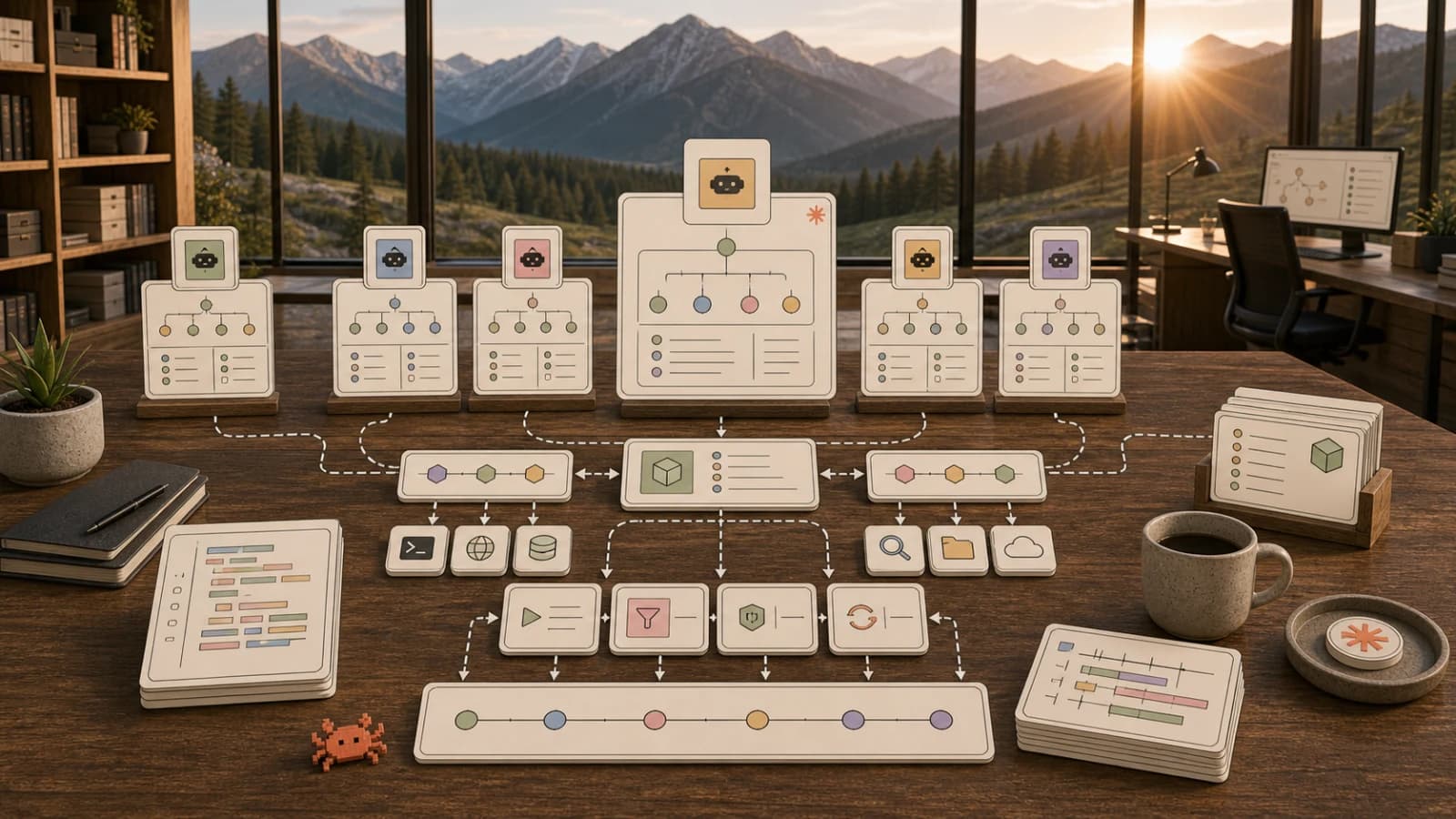
TL;DR
Claude Code is turning into an orchestration layer for agent teams. Here is how subagents, MCP, hooks, and long context fit together in 2026.
Official Sources#
| Resource | Description |
|---|---|
| Claude Code Overview | Official Claude Code documentation hub |
| Claude Code Sub-agents | How to create and orchestrate specialized subagents |
| MCP Integration | Connecting Claude Code to external tools via Model Context Protocol |
| Claude Code Hooks | Lifecycle hooks for session and tool events |
| Claude Code Settings | Configuration reference for permissions and behavior |
| Anthropic Pricing | Claude subscription tiers including Max for heavy Opus usage |
Claude Code's moat is not just model quality. The moat is the orchestration surface around the model: project memory, tool access, MCP, subagents, hooks, skills, and a workflow that already matches how developers ship software. If you need the foundation first, read what Claude Code is and why Claude Code won.
In 2026, the key phrase is agent teams.
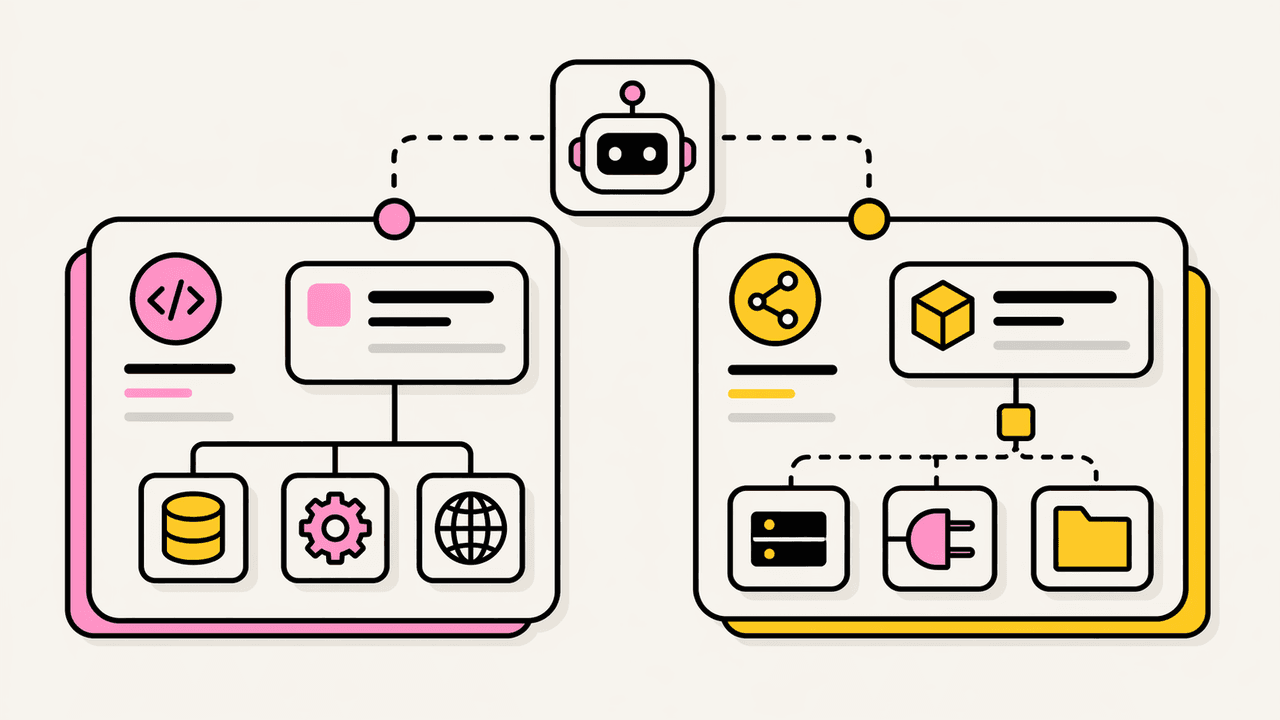
Not because every task needs five agents. Most do not. The point is that larger software work naturally splits into specialized responsibilities: planning, implementation, test repair, security review, docs, migration, browser QA, and release notes. Claude Code is one of the first tools where that split feels native.
Subagents Are the Unit of Specialization#
Anthropic's Claude Code subagents documentation defines subagents as specialized assistants with their own context window, prompt, and tool permissions.
That architecture matters for two reasons. The tactical version is in the Claude Code sub-agents guide, while the broader systems view is in how to coordinate multiple AI agents. For a structured breakdown of when to reach for each primitive, see subagents vs agent teams vs workflows.
First, context stays cleaner. A code reviewer does not need the full design exploration that led to the implementation. A test fixer does not need a long product strategy discussion. Separate context windows reduce noise.
Second, permissions get sharper. A documentation agent may only need file reads and markdown edits. A deploy agent may need shell access but not secrets. A database agent may need MCP tools that other agents should not touch.
The best subagents are boring and specific:
code-reviewertest-runnerfrontend-qadocs-maintainersecurity-checkermigration-planner
They should not be vague "senior engineer" personas. They should be narrow workers with clear trigger conditions and constrained tools.
MCP Turns Agents Into Operators#
MCP is the difference between an agent that edits files and an agent that can operate your actual workflow.
With MCP, Claude Code can connect to issue trackers, databases, monitoring tools, browser automation, design tools, docs, and internal APIs. Anthropic's MCP docs frame this around practical tasks: implementing from JIRA issues, checking monitoring data, querying Postgres, updating templates from Figma, and drafting follow-ups. For setup choices, see the MCP servers shortlist and the complete MCP servers guide. If you maintain servers, the MCP 2026-07-28 breaking changes covers the spec rewrite you will need to migrate to.
That is the line between coding assistant and operator.
For a small repo, filesystem plus shell may be enough. For a real product, the agent needs context from GitHub, Linear, Sentry, analytics, docs, and the database. MCP is how those systems become part of the same working loop.
From the archive
Client-Side Tool Calling Is the Privacy Pattern AI Apps Need
May 2, 2026 • 7 min read
Codex Changelog April 2026: Goals, Browser Use, GPT-5.5, and Safer Agents
May 2, 2026 • 9 min read
Codex /goal and Claude Managed Outcomes: The New Control Loops
May 2, 2026 • 18 min read
DeepSeek V4 Changes the Coding Agent Cost Equation
May 2, 2026 • 8 min read
Hooks Are the Guardrail Layer#
Subagents decide who does the work. MCP expands what they can touch. Hooks control when the workflow should pause, validate, or continue.
Claude Code hooks can run around tool calls, session starts, stop events, and subagent completion. That means teams can enforce project-specific rules:
- Run tests before stopping.
- Block edits to generated files.
- Check lint before a commit.
- Require an issue ID in branch names.
- Run a security scan after dependency changes.
- Add context at session start.
This is where agent workflows start looking like CI, except closer to the edit loop.
Opus 4.6 Pushes Longer Agent Work#
Anthropic's Claude Opus 4.6 announcement emphasized coding improvements, longer agentic tasks, larger codebases, stronger debugging, and a 1M token context window in beta on the developer platform.
The 1M context number gets the attention, but the more important shift is reliability on long tasks. Context length helps an agent see more. It does not automatically make it better at finishing. For agent teams, the winning combination is:
- Strong planner model
- Clear subagent boundaries
- Tool-specific permissions
- Test feedback
- Human review at checkpoints
Long context is useful when the repo is large. Workflow design is still what keeps the agent from wandering. With a 1M-context frontier model like Fable 5 in the lead, the manager-model pattern gets sharper; see orchestrating a fleet of agents with Fable 5.
The Practical Agent Team Pattern#
For production work, this is the pattern that holds up:
- One main agent owns the plan and integration.
- Specialist subagents handle bounded tasks.
- Each subagent has its own context and tool budget.
- Tests and lint run after each meaningful change.
- Human review happens at the diff and behavior level.
Example:
Text
main agent: split checkout refactor into three bounded tasks
backend subagent: update payment webhook handling
frontend subagent: update checkout UI states
test subagent: add regression coverage and run focused tests
review subagent: inspect the final diff for risk
The goal is not to make the workflow theatrical. The goal is to reduce bottlenecks while keeping accountability clear.
Where Claude Code Beats Generic Agent Frameworks#
Frameworks are useful when you are building agents into your product. Claude Code is useful when the agent's job is to work on a codebase.
That distinction matters.
If you are building a customer-facing support agent, use a product agent stack. If you are changing a Next.js app, migrating a schema, writing tests, or fixing CI, a coding agent already has the right primitives.
Claude Code's advantage is that the loop is local and concrete:
- Read files
- Edit files
- Run commands
- Inspect failures
- Iterate
- Produce a diff
Subagents, MCP, hooks, and skills extend that loop. They do not replace it.
Keywords to Own#
This cluster is going to keep growing:
- Claude Code subagents
- Claude Code agent teams
- Claude Code MCP
- Claude Code hooks
- Claude Code skills
- Claude Code Opus 4.6
- multi-agent coding workflow
- agentic coding playbook
The best content here is not generic AI-agent theory. Developers want exact workflow maps: what subagents to create, what permissions to give them, when MCP is worth it, and how to keep the final diff reviewable.
That is the 2026 Claude Code playbook.
FAQ#
What are Claude Code agent teams?#
Agent teams are specialized subagents coordinated by a main Claude Code agent. Each subagent has its own context window, prompt, and tool permissions. The main agent owns planning and integration while specialist subagents handle bounded tasks like code review, test running, frontend QA, or security checking.
When should I use subagents vs a single Claude Code session?#
Use subagents when a task naturally splits into specialized responsibilities with different tool needs. A checkout refactor might use backend, frontend, test, and review subagents. For simple bugs or small features, a single session is faster. The rule: subagents help when context separation and permission boundaries matter.
How does MCP fit into agent teams?#
MCP connects agents to external systems beyond the filesystem - issue trackers, databases, monitoring tools, browser automation, design tools, and APIs. Without MCP, agents edit files and run commands. With MCP, agents operate your actual workflow by reading from JIRA, querying Postgres, checking Sentry, or drafting follow-ups. MCP turns coding assistants into operators.
What are the best practices for Claude Code hooks?#
Use hooks to enforce project rules around tool calls and session events. Common patterns: run tests before stopping, block edits to generated files, lint before commits, require issue IDs in branch names, run security scans after dependency changes. Hooks make agent workflows feel like CI but closer to the edit loop.
How many subagents should I use for a typical task?#
Most tasks do not need five agents. Start with one main agent and add specialists only when context separation provides clear value. A practical team for a refactor: main agent (plan/integrate), one or two implementation subagents (backend/frontend), test subagent, and review subagent. The goal is reducing bottlenecks, not making workflows theatrical.
What is the difference between Claude Code and generic agent frameworks?#
Agent frameworks are for building agents into your product (customer support, data pipelines). Claude Code is for agents that work on a codebase - changing Next.js apps, migrating schemas, writing tests, fixing CI. The loop is local and concrete: read files, edit files, run commands, inspect failures, iterate, produce a diff. Subagents, MCP, and hooks extend that loop without replacing it.
Does Opus 4.6 make agent teams more effective?#
Opus 4.6 brings longer agentic task support, larger codebase handling, stronger debugging, and 1M token context in beta. Long context helps agents see more of the repo. But reliability on long tasks matters more than raw context length. The winning combination: strong planner model, clear subagent boundaries, tool-specific permissions, test feedback, and human review at checkpoints.
How do I keep agent team output reviewable?#
Keep the final diff reviewable by scoping subagent changes tightly. Each subagent should produce a bounded changeset. Run tests and lint after meaningful changes. Human review happens at the diff and behavior level, not inside agent reasoning. The pattern: main agent coordinates, specialists execute, humans verify the shipped code.
Read next
What Is Claude Code? The Complete Guide for 2026
Claude Code is Anthropic's AI coding agent for terminal, IDE, desktop, and browser workflows. Learn what it does, how it works, pricing, setup, MCP, skills, hooks, and subagents.
15 min readClaude Code Sub Agents: Parallel AI Development
Claude Code subagents let you split coding work across specialized assistants with their own context, tools, and instructions. The trick is using them for bounded work, not theatrical agent swarms.
8 min readBuilding Multi-Agent Workflows in Claude Code: A Practical Tutorial
How to use Claude Code's Task tool, custom sub-agents, and worktrees to run parallel development workflows. Real prompt examples, agent configurations, and workflow patterns from daily use.
11 min readShare
Developers Digest
Technical content at the intersection of AI and development. Building with AI agents, Claude Code, and modern dev tools - then showing you exactly how it works.
300+ videos30K+ GitHub stars850+ articles
Related Tools
ProductivityNew
A
AgentCanvas
A hosted infinite canvas your headless AI agents drive over MCP. Any MCP-speaking agent - Claude Code, Codex, Cursor, or...
View ToolAI CodingDaily Driver

Claude Code
Anthropic's agentic coding CLI. Runs in your terminal, edits files autonomously, spawns sub-agents, and maintains memory...
View ToolAI Models

Claude Opus 4.7
Anthropic's flagship reasoning model. Best-in-class for coding, long-context analysis, and agentic workflows. 1M token c...
View ToolAI ModelsNew
Claude Fable 5
Anthropic's first generally available Mythos-class model, released June 9, 2026. 1M context, 128K max output, $10/$50 pe...
View ToolApps from Developers Digest
Developer ToolsIn Progress
Subagent Studio
Design subagents visually instead of editing YAML by hand.
View AppDeveloper Tools
Agent Hub
Every coding agent in one window. Stop alt-tabbing between Claude, Codex, and Cursor.
View AppDeveloper ToolsIn Progress
Skill Builder
Turn a one-liner into a working Claude Code skill. From idea to installed in a minute.
View AppRelated Guides
Guide
Subagent MCP Scoping - Claude Code
Route specific MCP servers only to specific subagents.
Claude CodeGuide
Claude Code Setup Guide
Configure Claude Code for maximum productivity -- CLAUDE.md, sub-agents, MCP servers, and autonomous workflows.
AI AgentsGuide
Subagents - Claude Code
Spawn isolated workers with independent context windows.
Claude CodeRelated Videos
Anthropic's Cowork: Claude Code for the Rest of Your Work
In this video, we dive into Anthropic's newly launched Cowork, a user-friendly extension of Claude Code designed to streamline work for both developers and non-developers. This discussion includes an
Video·
Zed: The Open Source Agentic IDE - Use Claude Code, Codex & Gemini CLI in one place
Check out Zed here! https://zed.dev In this video, we dive into Zed, a robust open source code editor that has recently introduced the Agent Client Protocol. This new open standard allows...
Video·
Anthropic Sonnet 4.5 in Claude Code in 10 Minutes
To learn for free on Brilliant, go to https://brilliant.org/DevelopersDigest/ . You’ll also get 20% off an annual premium subscription TOOLS I USE → Wispr Flow (voice-to-text): https://dub.sh/...
Video·
Related Posts
15 min read
Claude Code
What Is Claude Code? The Complete Guide for 2026
Claude Code is Anthropic's AI coding agent for terminal, IDE, desktop, and browser workflows. Learn what it does, how it...

8 min read
Claude Code
Claude Code Sub Agents: Parallel AI Development
Claude Code subagents let you split coding work across specialized assistants with their own context, tools, and instruc...
11 min read
Claude Code
Building Multi-Agent Workflows in Claude Code: A Practical Tutorial
How to use Claude Code's Task tool, custom sub-agents, and worktrees to run parallel development workflows. Real prompt...
12 min read
Claude Code
Claude Code Hooks Explained
Hooks give you deterministic control over Claude Code. Auto-format on save, block dangerous commands, run tests before c...
10 min read
AI Coding
State of AI Coding: April 2026
The AI coding market just passed 90% developer adoption. Here's what the data actually says about which tools are winnin...
15 min read
Claude Code
What Is Claude Code? The Complete Guide for 2026
Claude Code is Anthropic's AI coding agent for terminal, IDE, desktop, and browser workflows. Learn what it does, how it...
Build with the member tools
Get Smarter About AI Dev
New tutorials, open-source projects, and deep dives on coding agents - delivered weekly.
One email per weekReal code, not theoryFree forever